
Cardboard vs. Paperboard Packaging: Pros, Cons, and the Ultimate Guide
Imagine unboxing a heavy espresso machine versus a luxury face cream. The espresso machine arrives in a thick, rigid, multi-layered box designed to take a beating in transit. The face cream sits in a smooth, vibrant, perfectly folded carton on a retail shelf. Most people look at both and call them “cardboard.” In the packaging industry, however, that is a rookie mistake that can cost you thousands in damaged goods or poor retail presentation.
This guide breaks down the core distinctions between cardboard and paperboard packaging, giving you the exact technical knowledge needed to source, design, and manufacture the perfect box.
What’s the Difference?
The confusion exists because both materials are made from paper pulp. However, their structural engineering is entirely different.
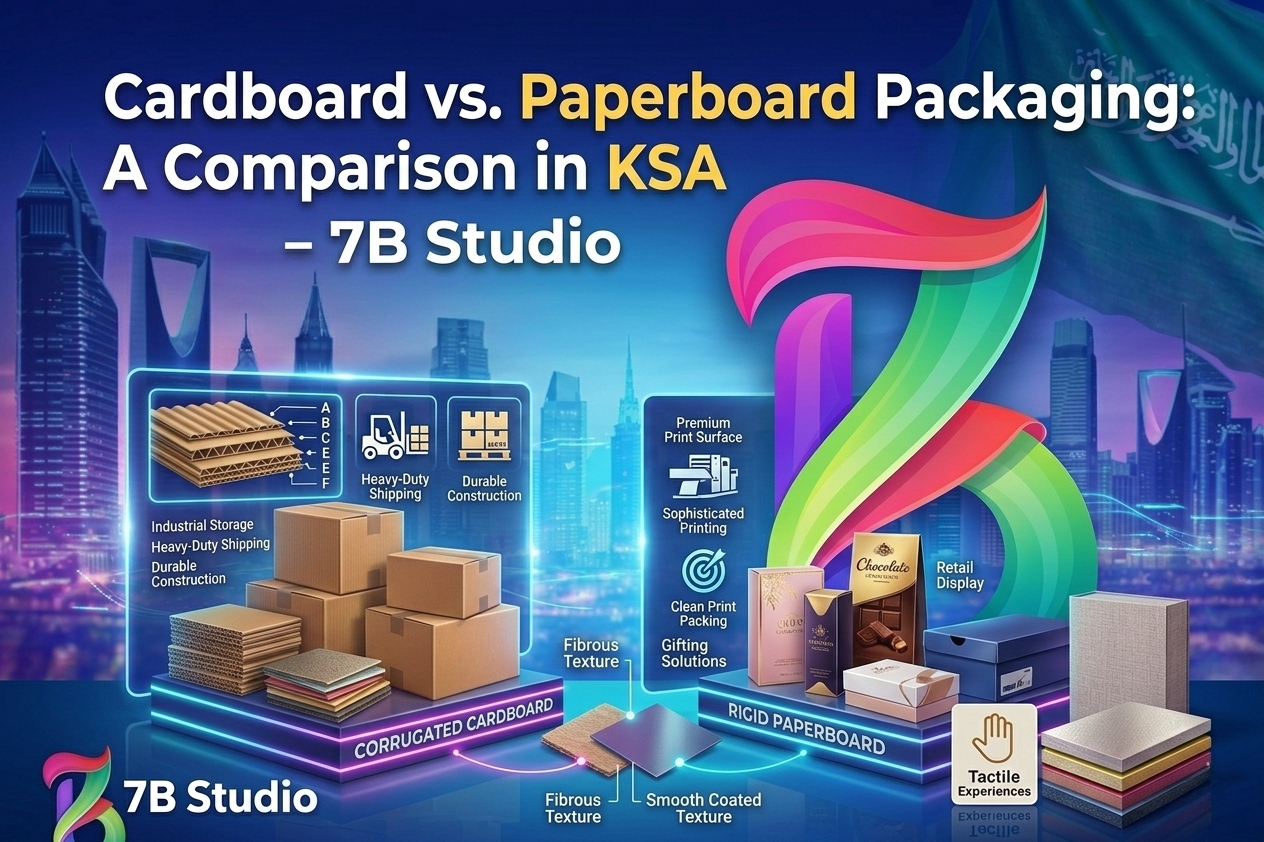
- Cardboard (Corrugated Fiberboard): This is a multi-layered sandwich. It consists of a wavy, fluted layer of paper (the corrugating medium) glued between two flat outer layers (the liners). This architecture creates incredible structural strength and shock absorption.
- Paperboard (Carton Board / Box Board Paper): This is a single, thick, rigid sheet of paper. There are no flutes or wavy inner layers. It is essentially a heavy-duty version of the paper you use in a standard printer, designed to be easily folded, cut, and printed on with high-definition graphics.
When you are dealing with cardboard packaging manufacturers, using the correct terminology ensures you don’t accidentally order a flimsy retail box for a heavy shipping requirement.
Types of Cardboard
Cardboard strength is determined by the size of the wavy inner layer (flutes) and the number of walls.
- A-Flute (Approx. 5mm): Excellent cushioning and stacking strength. Great for fragile items.
- B-Flute (Approx. 3mm): Highly crush-resistant, frequently used for die-cut boxes and canned goods.
- C-Flute (Approx. 4mm): The industry standard. Used for over 80% of standard corrugated shipping boxes.
- E-Flute (Approx. 1.5mm): Very thin, offering a flatter surface for printed cardboard packaging while maintaining some crush resistance. Common in pizza boxes.
- F-Flute (Approx. 0.8mm): Micro-fluting used for high-end retail packaging that requires more rigidity than paperboard but the same crisp printing.
- Wall Types: Available in Single-Wall (one fluted layer), Double-Wall (two fluted layers for heavy shipping), and Triple-Wall (industrial strength).
- Solid Fibreboard: A heavy-duty, dense board made by laminating multiple plies of paperboard together, often used for heavy industrial goods or moisture-resistant applications.
Types of Paperboard
Paperboard is categorized by the pulp used and its surface treatment, always measured in GSM (grams per square meter). High-quality paperboard packaging typically ranges from 250 GSM to 400 GSM.
- SBS (Solid Bleached Sulfate): The premium standard. It is bright white inside and out, offering the highest quality printing surface for cosmetics and pharmaceuticals.
- FBB (Folding Box Board): Features a bleached top layer and an unbleached or mechanical pulp inner layer. Excellent for health and beauty products.
- CUK (Coated Unbleached Kraft): Made from unbleached kraft pulp, making it incredibly tear-resistant. Often used for beverage carriers (like 6-packs).
- Recycled Greyboard: Made from 100% recycled materials. It has a grey appearance and is generally used for backing boards or when coated for budget-friendly retail cartons.
When sourcing paper board in Bangladesh or other growing manufacturing hubs, verifying the GSM and pulp type is critical to ensure the board doesn’t tear during the folding process.
Cardboard Pros & Cons
Pros:
- Unmatched Protection: The fluted design absorbs shocks, making it the only choice for e-commerce shipping.
- High Stacking Strength: Can withstand immense top-down pressure in warehouses.
- Highly Customizable: Easily cut and scaled for bespoke cardboard packaging design.
- Insulation: The air pockets in the flutes provide slight temperature insulation.
Cons:
- Bulky: Takes up significantly more storage space in a warehouse.
- Printing Limitations: The fluted texture can cause a “washboard” effect on intricate graphics unless an E or F flute is used.
- Rough Presentation: Can feel overly utilitarian for high-end retail products.
Paperboard Pros & Cons
Pros:
- Superior Printability: The smooth surface allows for photo-realistic graphics, foil stamping, and embossing.
- Space Efficient: Ships and stores completely flat, taking up a fraction of the space of corrugated boxes.
- Cost-Effective at Scale: Highly economical for mass retail production.
- Lightweight: Reduces domestic and international shipping weights for individual units.
Cons:
- Low Impact Resistance: Offers almost no shock absorption for fragile items.
- Weight Limits: Cannot hold heavy items without tearing or buckling.
- Moisture Vulnerability: Uncoated paperboard quickly absorbs moisture and loses its structural integrity.
Head-to-Head Comparison
If you are shipping a heavy product directly to a consumer via courier, corrugated cardboard is mandatory. Its strength-to-weight ratio and shock absorption are unparalleled. However, if your product is sitting on a retail shelf, competing for attention, paperboard wins every time. Paperboard acts as a blank canvas for branding, offering a smooth, premium feel that corrugated simply cannot match without expensive laminations. For storage, paperboard is vastly superior, storing completely flat until folded, whereas corrugated boxes, even when flat-packed, take up substantial warehouse real estate.
Industries Using Each
- Corrugated Cardboard: E-commerce shipping, electronics, appliances, bulk cardboard food packaging (like master cartons for grocery delivery), and subscription boxes.
- Paperboard: Cosmetics, pharmaceuticals, retail tech accessories, frozen foods, and retail food packaging companies in Saudi Arabia and globally (such as cereal boxes, pasta cartons, and bakery boxes).
Sustainability Section
Both materials are inherently eco-friendly, as they are paper-based and highly recyclable. They are a core offering for modern paper bag manufacturers and box makers looking to reduce plastic reliance.
However, there is a catch. You must look for FSC (Forest Stewardship Council) or PEFC certifications to ensure the pulp comes from responsibly managed forests. The biggest sustainability issue lies in coatings. When paperboard is laminated with heavy plastics or wax to make it waterproof (often seen in food packaging), it is no longer widely recyclable and often ends up in a landfill. Always flag coating requirements with your manufacturer to find water-based, recyclable alternatives.
How to Choose: A 5-Factor Framework
- Product Weight: Heavy items strictly require corrugated cardboard. Lightweight items are safe in paperboard.
- The Journey: Is it shipping through the mail network (Cardboard) or going on a pallet to a retail shelf (Paperboard)?
- Unboxing Experience: If premium, high-end graphics are the priority, paperboard is required.
- Storage Real Estate: If warehouse space is tight, paperboard or micro-fluted cardboard saves significant room.
- Local Sourcing: Whether you are looking for packaging box bd, general packaging bd suppliers, or navigating the booming paperboard packaging KSA market, ensure your local vendor specializes in the specific machinery required for your chosen material.
Expert Tips
When advising brands dealing with international suppliers—from finding reliable printing and packaging companies in Saudi Arabia to specialized vendors like Al Jawad Carton Packaging Factory—I always emphasize the “Blank Prototype Rule.” Before committing to a massive run of printed cardboard packaging, demand an unprinted, die-cut structural sample. Test it with your actual product inside. A design might look structurally sound on a screen, but fail immediately when a 500g bottle is placed inside.
Final Verdict
The line between retail presentation and transit protection is where packaging succeeds or fails. Industry events like the Saudi Paper and Packaging Expo (and the upcoming Saudi Paper Packaging Expo 2026) consistently highlight that the best packaging strategies often use both: a beautifully printed paperboard carton for the retail experience, safely housed inside a robust corrugated cardboard master carton for shipping. Whether you are dealing with local vendors or top-tier packaging companies in Saudi Arabia, specifying exactly what you need—rather than just asking for “cardboard”—is the mark of a true professional.
Frequently Asked Questions (FAQ)
1. What is the main difference between cardboard and paperboard?
Cardboard (corrugated) has a wavy inner layer for shock absorption and strength. Paperboard is a single, thick, flat sheet of paper used for folding cartons and retail displays.
2. Is paperboard the same as box board paper?
Yes, in the industry, “box board paper” and “carton board” are interchangeable terms for paperboard.
3. How does the paper board price in Bangladesh compare to corrugated cardboard?
Pricing fluctuates based on global pulp markets, the specific GSM, and the coatings required. Generally, standard unprinted corrugated cardboard is highly cost-effective for volume shipping, while premium SBS paperboard carries a higher material cost due to the bleaching and finishing processes.
4. Which is better for printed cardboard packaging?
If you want high-definition, magazine-quality graphics, paperboard is superior. If you need structural strength with decent graphics, choose a thin E-flute or F-flute corrugated cardboard.
5. Are cardboard packaging manufacturers able to produce paperboard?
Not always. Corrugators (machines that make the wavy flutes) are different from the offset printing and folding machines used for paperboard cartons. Always verify a manufacturer’s specific capabilities.
6. What is the best material for cardboard food packaging?
For direct food contact, SBS or food-grade Kraft paperboard with a food-safe barrier coating is standard. For transporting bulk packaged foods, corrugated cardboard master cartons are used.
7. How do I find reliable paper packaging companies in Saudi Arabia?
Attending regional trade shows, reviewing manufacturer ISO certifications, and requesting structural samples are the best ways to vet new suppliers in growing markets.
8. Can paperboard packaging hold heavy items?
No. Paperboard is designed for lightweight retail items like cosmetics or dry foods. Heavy items will cause the board to bow, tear, or collapse.
9. What GSM should I use for retail packaging?
For standard folding cartons (like a supplement box or perfume box), 300 to 350 GSM is the industry standard, offering a good balance of rigidity and foldability.
10. Is all paperboard packaging recyclable?
Mostly, yes. However, if the paperboard is coated with a heavy plastic laminate, foil stamping, or wax to make it waterproof, it often cannot be processed by standard recycling facilities.

Post a Comment