
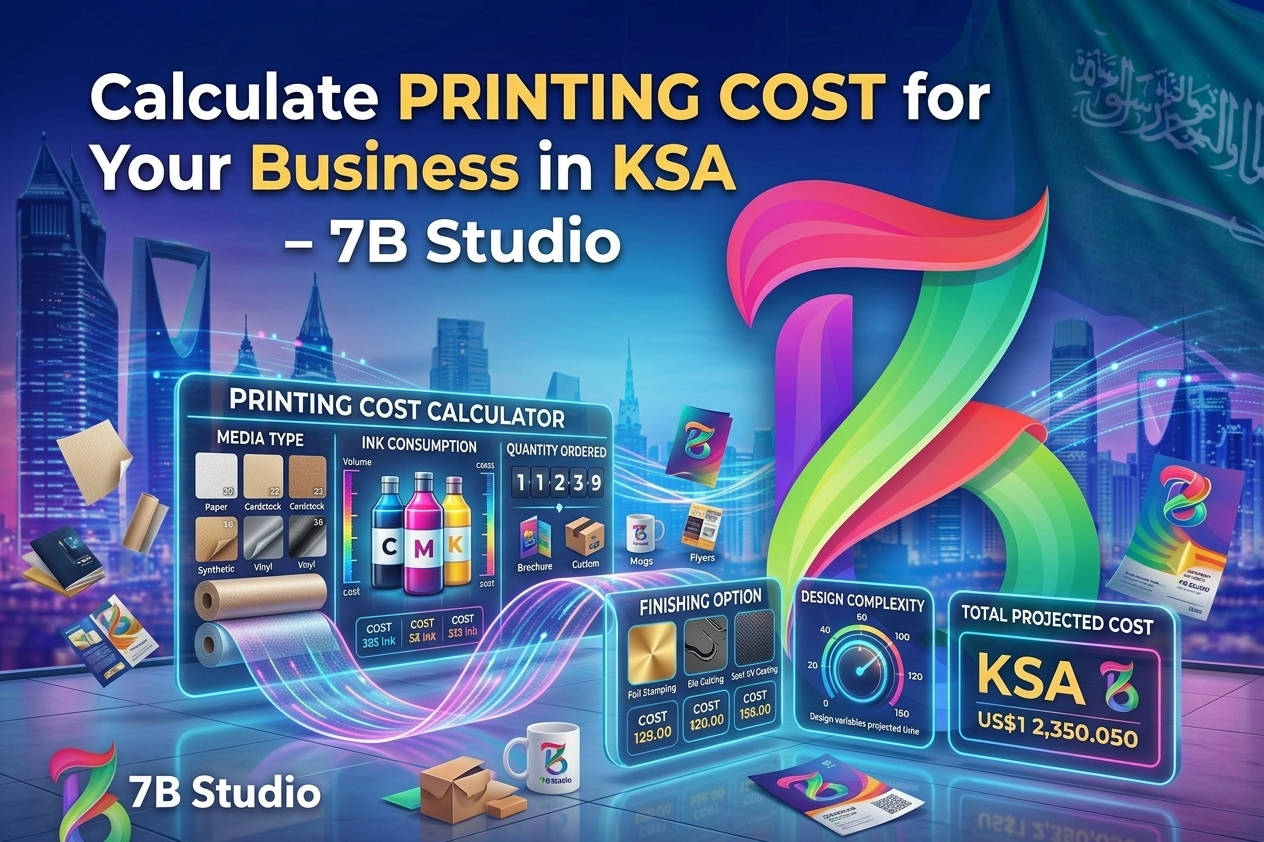
How to Calculate Printing Cost for Your Business – Step-by-Step Guide
Whether you are printing internal reports, marketing flyers, or premium product packaging, unchecked printing expenses can quickly eat into your profit margins. As we move through 2026, understanding exactly where your printing budget goes is more critical than ever due to fluctuating material costs and new printing technologies.
This comprehensive guide breaks down exactly how to calculate printing costs for your business, identify hidden expenses, and optimize your budget for maximum profitability.
What is Printing Cost and Why Does It Matter for Your Business?
Definition of Printing Cost in Business
In a business context, printing cost is the total financial output required to produce printed materials. This includes not just the obvious materials like ink and paper, but also the depreciation of the equipment, electricity, labor, and maintenance required to keep the printers running.
Why Calculating Printing Cost is Important
If you don’t track your printing expenses, you cannot control them. Calculating these costs allows you to set accurate operational budgets, price your own products or services correctly, and make informed decisions about whether to print in-house or outsource to a commercial print shop.
How Printing Costs Affect Your Business Profit
Every dollar spent on inefficient printing is a dollar subtracted directly from your net profit. By calculating and optimizing these costs, businesses can lower their overhead, allowing for more competitive pricing or higher profit margins on the end product.
Types of Printing Costs Every Business Should Know
Fixed Printing Costs
These are the expenses that do not change regardless of how many pages you print. Examples include the purchase price of the printer, monthly lease payments for commercial copiers, and flat-rate annual maintenance contracts.
Variable Printing Costs
Variable costs fluctuate directly with your print volume. The more you print, the higher these costs go. They include paper, ink cartridges, toner, and specialty finishing materials like staples or binding coils.
Direct vs Indirect Printing Costs
Direct costs are tied directly to a specific print job—such as the exact amount of glossy cardstock used for a batch of business cards. Indirect costs are the supporting expenses, such as the electricity the printer uses or the hourly wage of the employee operating the machine.
Hidden Printing Costs Most Businesses Overlook
The most common hidden costs include paper jams (wasted materials), device downtime, IT support hours spent fixing network printer issues, and the cost of securely disposing of sensitive printed documents.
Key Factors That Affect Printing Cost for Your Business
Paper Size & Quality
A standard A4 sheet of 80 GSM paper costs pennies. However, moving to A3 sizing, or upgrading to a heavy 300 GSM textured cardstock, multiplies your base paper cost significantly.
Ink & Toner Consumption
Graphics, photos, and dense blocks of color consume drastically more ink than standard text documents. A page with 5% text coverage costs a fraction of a page with 100% full-color photo coverage.
Print Volume & Quantity
In commercial printing, volume dictates price. Printing 10,000 flyers utilizes economies of scale, making the cost per unit much lower than printing just 100 flyers.
Color vs Black & White Printing
Color printing requires four separate ink cartridges (Cyan, Magenta, Yellow, and Black – CMYK), while black and white (monochrome) only requires one. Consequently, color printing is almost always more expensive.
Single-Sided vs Double-Sided Printing
Double-sided (duplex) printing cuts your variable paper costs exactly in half, though it does not reduce your ink or toner consumption.
Printer Type – Inkjet vs Laser vs Offset
- Inkjet: Cheap to buy, but very expensive per page due to high liquid ink costs. Best for low-volume, high-quality photos.
- Laser: Higher upfront cost, but uses toner powder which makes the cost per page very low for text documents.
- Offset: Requires expensive metal plates to be made (high setup cost), but offers the cheapest per-page cost for massive, bulk runs.
Design Complexity & File Type
Designs with edge-to-edge color (full bleed) require larger paper that is then trimmed down, increasing both material usage and labor costs.
How to Calculate Printing Cost Per Page
Cost Per Page Formula Explained
To find your base cost per page, you need to calculate your material costs and divide them by their respective yields. The basic formula is: (Cost of Cartridge ÷ Page Yield) + (Cost of Paper Ream ÷ Sheets per Ream) = Cost Per Page.
How to Calculate Ink or Toner Cost Per Page
Find the price of your ink or toner cartridge and divide it by the manufacturer’s estimated page yield (usually based on 5% page coverage). Example: A $100 toner cartridge that prints 2,500 pages costs $0.04 per page in toner.
How to Calculate Paper Cost Per Page
Take the total price of a ream of paper and divide it by the number of sheets. Example: A $5 ream containing 500 sheets costs $0.01 per sheet.
How to Include Maintenance Cost Per Page
Take your annual maintenance costs (like replacing the fuser or drum unit) and divide it by your estimated annual print volume. Add this fraction of a cent to your page cost for total accuracy.
Sample Calculation – Cost Per Page Example
- Toner Cost: $0.04
- Paper Cost: $0.01
- Maintenance Buffer: $0.005
- Total Cost Per Page: $0.055 (or 5.5 cents)
How to Calculate Total Printing Cost for a Print Job
Step 1 – Determine Print Quantity
Identify the exact number of finished items you need, factoring in an extra 5-10% for test prints and setup waste.
Step 2 – Calculate Material Cost (Paper + Ink)
Multiply your calculated Cost Per Page by the total print quantity.
Step 3 – Add Labour & Setup Cost
Calculate the hourly wage of the operator and multiply it by the time it takes to set up the file, load the machine, and trim or fold the final product.
Step 4 – Include Overhead & Equipment Cost
Add a small percentage of your overhead (electricity, equipment depreciation) to the job to ensure the machine is paying for itself over time.
Step 5 – Add Profit Margin & Final Price
If you are printing for a client, multiply your total cost by your desired markup (e.g., 50% or 100%) to determine the final retail price.
Complete Printing Cost Calculation Example
If you are printing 1,000 brochures:
- Materials (Paper/Ink): $150
- Labor (1 hour): $25
- Overhead allocation: $10
- Total Job Cost: $185 (If selling, add your profit margin here).
Printing Cost Calculation Formula for Different Print Products
How to Calculate Business Card Printing Cost
Factor in heavy cardstock (250+ GSM), full-color ink, and the labor required for precision guillotine cutting. Small runs are expensive per unit; bulk runs are very cheap.
How to Calculate Flyer & Leaflet Printing Cost
Calculate based on lightweight paper (130-150 GSM) and high-speed laser or offset printing. Cost is primarily driven by the ink coverage of the design.
How to Calculate Brochure Printing Cost
Brochures require double-sided printing and mechanical folding. You must add finishing costs (the time and machinery used to fold the paper) to your base material costs.
How to Calculate Banner & Poster Printing Cost
Large format printing is calculated per square foot or square meter rather than per page. Calculate the cost of the vinyl/paper roll per square foot, add the wide-format ink cost, and factor in finishing like grommets or hemming.
How to Calculate Packaging Printing Cost
Packaging involves custom dielines (cutting templates). Calculate the cost of thick corrugated or folding board, the ink, and the specialized die-cutting and gluing labor.
How to Calculate Invoice & Stationery Printing Cost
Usually calculated using cheap, uncoated 80 GSM paper and 1-color (black) ink. This is one of the cheapest products to print in bulk.
In-House Printing vs Outsourcing – Cost Comparison
Cost of In-House Printing for Small Business
In-house printing gives you immediate turnaround times but requires you to absorb the upfront cost of the machine, ongoing maintenance, and the labor of your own staff.
Cost of Outsourcing to a Print Shop
Outsourcing shifts all maintenance and labor costs to the vendor. You pay a marked-up per-unit price, but gain access to professional quality, commercial finishes, and zero equipment liability.
When In-House Printing is More Cost-Effective
In-house printing wins for daily operational documents (invoices, memos), low-volume internal reports, and highly sensitive documents that cannot leave the building.
When Outsourcing Saves More Money
Outsourcing is vastly cheaper for massive bulk runs (where commercial offset printing reduces the per-unit cost to pennies) and for complex jobs requiring binding, custom cutting, or specialty finishes like foil stamping.
How to Reduce Printing Costs for Your Business
Print in Bulk to Lower Per-Unit Cost
Whether printing in-house or outsourcing, the setup cost is the most expensive part. Printing 5,000 flyers at once is substantially cheaper per unit than ordering 1,000 flyers five separate times.
Switch to Digital Where Possible
Implement a “think before you print” policy. Use digital signatures, PDF forms, and cloud storage to eliminate unnecessary operational printing.
Choose the Right Paper & Ink Combination
Reserve heavy glossy paper and full-color printing for client-facing marketing materials. Use standard 80 GSM paper and grayscale (draft mode) for all internal documents.
Use Duplex Printing to Save Paper
Set your office printer defaults to double-sided printing. This instantly cuts your internal paper consumption by 50%.
Regular Printer Maintenance to Avoid Waste
A poorly maintained printer creates paper jams and faded streaks, resulting in documents that must be thrown away and reprinted. Regular cleaning saves materials.
Compare Print Vendors for Best Price
If outsourcing, never rely on a single vendor. Get quotes from three different commercial printers to ensure you are getting the best market rate for your specific job.
Printing Cost Calculator – Tools & Templates
Free Online Printing Cost Calculator Tools
Many print manufacturers and office supply websites offer free online calculators where you can input your cartridge price and yield to instantly see your exact page cost.
Excel Template for Printing Cost Calculation
Creating a master Excel sheet allows you to track expenses over time. Create columns for Date, Print Job Name, Paper Cost, Ink Cost, Labor, and Total Cost to monitor your monthly spending.
How to Build Your Own Printing Cost Spreadsheet
To build a custom tool, set up a “Master Data” tab with your current paper and ink prices. In your main calculator tab, use basic multiplication formulas so that when you type in a desired quantity, it automatically pulls the data and calculates the total job cost.
Printing Cost for Small Business vs Large Business
Printing Budget for Startups & Small Businesses
Startups should focus on keeping capital expenditures low. Rely on a dependable office laser printer for day-to-day needs and outsource marketing materials until print volume justifies buying commercial equipment.
Printing Cost Management for Medium Businesses
Medium businesses should utilize print management software. This tracks exactly which departments are printing what, allowing management to identify waste and enforce print quotas.
Enterprise-Level Printing Cost Optimisation
Large corporations use Managed Print Services (MPS). A third-party company audits the entire fleet of printers, optimizes their locations, automates toner delivery, and handles all maintenance for a flat, optimized monthly fee.
Frequently Asked Questions (FAQ)
1. How do I calculate the cost of printing per page?
To calculate printing cost per page, divide the price of your ink or toner cartridge by its expected page yield. Then, divide the cost of a paper ream by the number of sheets. Add those two numbers together for your total base cost.
2. What is the average printing cost for a small business?
When you properly calculate printing cost, most small businesses spend between 1% to 3% of their total annual revenue on document production, hardware, and supplies.
3. How do print shops calculate their prices?
Print shops calculate prices by adding the base material costs (paper and ink) to their machine overhead, labor, setup time, and a standard profit margin markup.
4. What is the formula for printing cost?
The fundamental formula is: Total Cost = (Material Cost per Unit x Quantity) + Setup Costs + Labor + Overhead.
5. How can I reduce my business printing costs?
You can drastically reduce costs by enforcing double-sided printing, setting printers to grayscale by default, auditing department print usage, and outsourcing large bulk jobs to commercial offset printers.
6. Is it cheaper to print in-house or outsource?
In-house is cheaper for low-volume, standard office documents. Outsourcing is significantly cheaper for high-volume marketing materials or anything requiring specialized cutting, binding, or premium finishes.
7. How to calculate flex printing cost for large outdoor banners?
To know how to calculate flex printing cost, you must measure the total square footage of the design. Multiply the square footage by the cost of the flex vinyl roll per square foot, add the wide-format ink cost per square foot, and include the labor for finishing (like adding grommets).
8. How to calculate dtf printing cost for custom apparel?
If you want to know how to calculate dtf printing cost (Direct to Film), factor in the cost of the PET film per square inch, the CMYK and white ink volume used for the specific design, the adhesive powder, and the heat press time.
9. How to calculate the cost of ink in printing without a software tool?
Wondering how to calculate the cost of ink in printing manually? Find the retail price of your ink cartridge and divide it by the manufacturer’s stated page yield (based on 5% coverage). If your design uses heavy color (like 20% coverage), multiply that base cost by four.
10. Does printer maintenance impact the final calculation?
Yes. Failing to factor in drum replacements, fuser kits, and routine servicing will result in an artificially low page cost that does not reflect your true operational expenses.

Post a Comment