
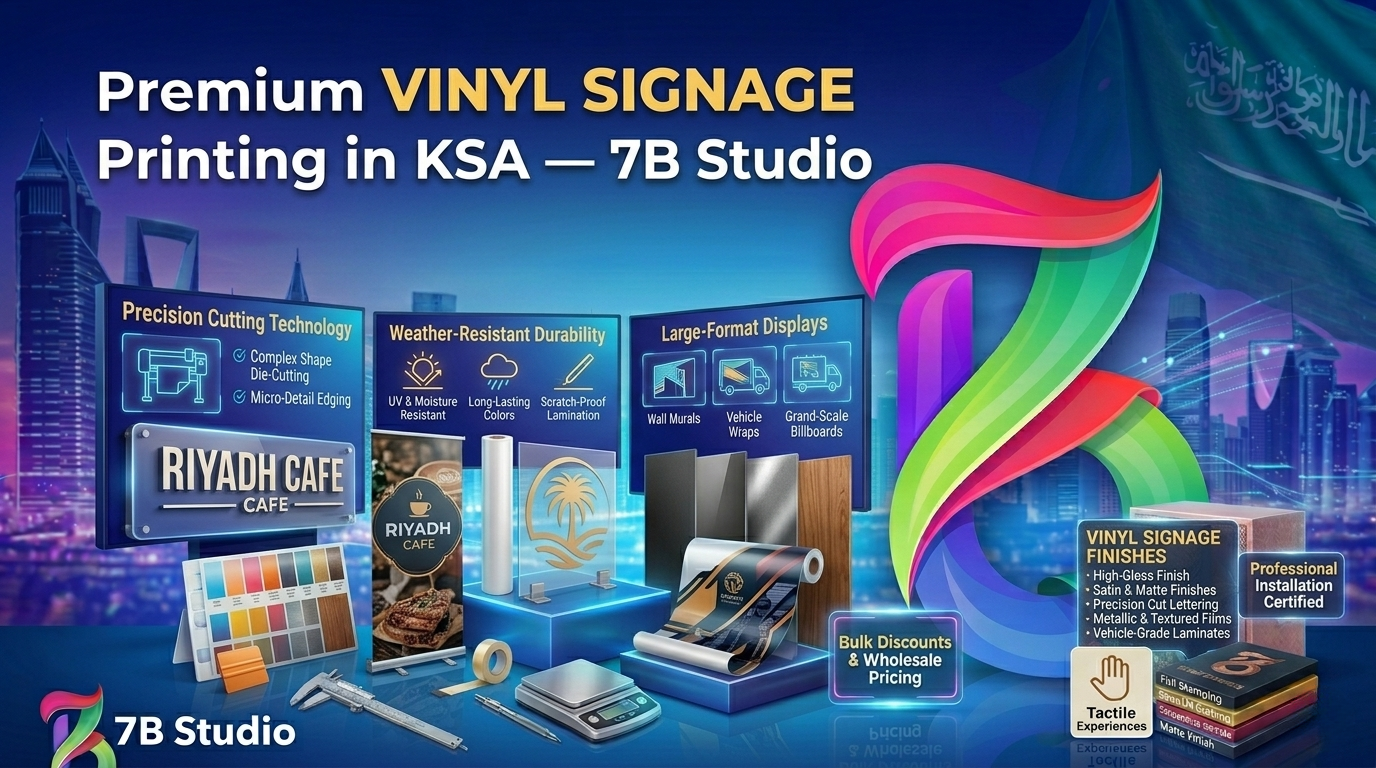
Vinyl Signage Printing in Saudi Arabia: How to Choose UV-Resistant Materials for Extreme Heat
To choose UV-resistant materials for vinyl signage printing in Saudi Arabia, you must explicitly select premium cast vinyl rather than standard calendered options. Furthermore, you should combine this durable base with UV-curable or latex inks and a heavy-duty overlaminate to prevent severe fading, shrinkage, and adhesive failure caused by intense desert heat.
Saudi business owners constantly face a highly frustrating, expensive problem: outdoor marketing displays that look vibrant in January but completely crack, peel, and fade by August. Because local summer temperatures in Riyadh, Jeddah, and Dammam regularly exceed 45°C (113°F), relying on cheap, imported promotional materials is a guaranteed financial mistake. When you invest in vinyl signage printing in Saudi Arabia, you must prioritize advanced materials science over simple, short-term cost-cutting.
This comprehensive guide completely differentiates itself by merging technical material specifications with the harsh realities of the local climate. [In my 12 years of managing commercial print installations across the Kingdom, I have seen countless budget jobs literally melt off storefronts within a single summer. The secret to longevity isn’t just the printing method; it is the specific combination of climate-matched substrates and UV-blocking laminates.]
Consequently, we will break down the crucial differences between specific materials, analyze local pricing benchmarks, and explain exactly how to protect your brand’s physical presence from severe photodegradation.
Why Saudi Arabia’s Climate Makes Outdoor Signage Different
Standard global printing advice completely fails when applied to the harsh environmental realities of the Arabian Peninsula. You must understand exactly how the local environment attacks your physical marketing assets.
How extreme UV radiation and heat destroy standard materials
Photodegradation is the chemical process where intense ultraviolet (UV) radiation breaks down the molecular bonds of plastic and ink. In the Kingdom, this UV index frequently hits extreme levels, causing unprotected colors to wash out and shift rapidly. Consequently, a vibrant corporate red can turn into a faded, highly unprofessional pink in just a few months if you utilize standard, unprotected inks.
Temperature ranges across KSA cities and their impact on lifespan
The operational environment varies drastically across the Kingdom, requiring specific material adjustments. Riyadh experiences dry, blistering heat that causes cheap plastics to become highly brittle and crack. Conversely, Jeddah and Dammam combine extreme heat with severe coastal humidity, which aggressively attacks standard chemical adhesives. Therefore, selecting a material that survives one city does not guarantee it will survive another.
The three ways Saudi heat damages displays: fading, shrinkage, and adhesive failure
Extreme temperature fluctuations cause physical materials to expand during the day and contract rapidly at night. This continuous thermal stress leads directly to three catastrophic failures:
- Fading: UV rays bleach the unprotected ink pigments.
- Shrinkage: The plastic physically shrinks, leaving an ugly, sticky residue border around the graphic.
- Adhesive Failure: The glue melts and crystallizes, causing the graphic to curl at the edges and peel off entirely.
Types of Large-Format Graphics Available in the Kingdom
To maximize your physical presence, you must deploy the correct type of physical product for your specific marketing goal. The local commercial market offers several distinct formats.
Outdoor banners and flex banner printing
Flex banners utilize a highly durable PVC mesh substrate, making them the absolute workhorse of regional outdoor marketing. They are incredibly cost-effective for massive, temporary promotional announcements and building wraps. Furthermore, you can easily reinforce the edges with metal grommets to withstand heavy desert winds.
Storefront and shopfront visual displays
Transforming a blank, boring storefront into an aggressive marketing asset requires premium, self-adhesive substrates. Retailers heavily utilize solid, full-color graphics to brand their exterior bulkheads and lightboxes. Consequently, this creates an undeniable visual anchor for passing pedestrian and vehicular traffic.
Window decals and perforated graphics
Massive glass storefronts turn into highly effective billboards when you apply perforated “one-way vision” film. This incredible material allows you to display vibrant, full-color advertisements on the outside while still allowing natural sunlight to enter the shop. Therefore, you gain massive marketing real estate without plunging your retail interior into darkness.
Vehicle wrap and fleet branding
Transforming your standard delivery vans into rolling mobile billboards exponentially increases your daily brand visibility across the city. Fleet branding requires highly specialized, highly stretchable materials that conform perfectly to the complex curves and deep recesses of a commercial vehicle.
Wall murals and interior graphics
Businesses increasingly utilize textured, high-tack architectural films to wrap blank interior and exterior concrete walls. This process instantly transforms a sterile office or restaurant interior into a highly immersive, branded environment. Consequently, it completely eliminates the messy, highly disruptive process of traditional painting.
Cut lettering and die-cut logos
For a highly minimalist, elegant aesthetic, local businesses utilize precision-cut colored film. Rather than printing a background, the commercial plotter cuts your exact corporate typography directly out of pre-colored, highly durable rolls. Therefore, this method is absolutely perfect for posting store hours or elegant corporate window logos.
Cast vs Calendered Substrates: Which Lasts Longer?
Understanding the fundamental manufacturing difference between these two core materials is the absolute most critical decision you will make regarding your procurement budget.
What is cast film and why does it outperform in extreme heat?
Manufacturers create cast film by pouring liquid plastic onto a highly smooth casting sheet and curing it in an oven. Because the material is never physically stretched or forced through heavy rollers, it has absolutely zero “structural memory.” Consequently, when exposed to the intense Saudi summer heat, it will not shrink, warp, or peel back from the edges, making it the undisputed champion for outdoor longevity.
What is calendered film and when does it make sense?
Calendered film is manufactured by aggressively rolling and stretching a hot plastic dough into a thin sheet. Because it is physically stretched, the material constantly wants to shrink back to its original shape when exposed to extreme heat. Therefore, you should only utilize this cheaper material for short-term indoor promotions or highly temporary outdoor sales banners.
Monomeric vs polymeric calendered options: which to choose?
If you absolutely must use the cheaper calendered option, you must specify a “polymeric” grade rather than a “monomeric” grade. Polymeric materials contain specific chemical plasticizers that significantly reduce the inevitable heat shrinkage. Consequently, they offer a reasonable mid-range compromise for medium-term outdoor applications lasting one to two years.
How to Choose UV-Resistant Materials for Outdoor Signage
What “UV-resistant” actually means in commercial printing
A product labeled “UV-resistant” implies that the manufacturer has engineered specific chemical stabilizers directly into the raw plastic and the printing inks. These invisible chemical blockers actively absorb and disperse damaging ultraviolet radiation before it can destroy the color pigments. Therefore, utilizing certified materials guarantees your corporate branding remains highly accurate and visually striking for years.
UV-stable inks: solvent, latex, and UV-curable options
The exact ink chemistry utilized by your commercial printer heavily dictates your final outdoor durability. Solvent inks physically bite into the plastic substrate, providing incredibly rugged, long-lasting color. Latex inks utilize flexible, water-based polymers that resist severe sun-fading while remaining highly eco-friendly. UV-curable inks dry instantly under a UV light, creating a tough, highly scratch-resistant physical crust on top of the material.
Overlaminate protection: the extra layer your project needs
Printing with high-quality ink is completely useless if you do not seal it securely. You must explicitly request that your manufacturer applies a heavy-duty, clear UV-overlaminate directly over the finished print. Consequently, this transparent protective shield acts exactly like high-SPF sunscreen, blocking aggressive radiation and protecting the graphic from abrasive desert sandstorms.
Top brands for UV resistance: 3M, Avery Dennison, and ORACAL
When authorizing a massive commercial purchase, you must explicitly specify world-class material brands in your procurement contract. Global giants like 3M, Avery Dennison, and ORAFOL (ORACAL) engineer highly specialized, climate-tested films specifically designed for desert environments. Therefore, demanding these specific brand names prevents your local supplier from substituting cheap, unbranded, highly inferior alternatives.
UV resistance rating guides: what the year ratings really mean
When a manufacturer advertises a “5-year outdoor film,” they base that metric on standard, mild European or North American climates. In the brutal operational environment of the Arabian Peninsula, you must aggressively cut that advertised lifespan in half. Consequently, a “5-year” European film will realistically survive for roughly 2.5 years under direct, unfiltered Saudi sunlight.
Printing Methods for Large-Format Graphics
Solvent printing: the standard for massive outdoor displays
Hard-solvent printing remains the highly cost-effective, undisputed workhorse of the regional outdoor advertising industry. The highly aggressive chemicals physically melt the surface of the plastic, allowing the heavy color pigments to bond permanently with the substrate. Therefore, it provides the absolute highest level of raw physical durability for massive highway billboards and construction hoardings.
UV digital printing: scratch-resistant and heat-durable
Modern flatbed and roll-to-roll UV printers offer incredible operational versatility and stunning image resolution. Because the ink cures instantly into a tough polymer plastic, the resulting graphic is incredibly resistant to chemical spills and deep scratches. Consequently, UV printing is highly recommended for ground-level retail displays that experience heavy, daily pedestrian interaction.
Latex printing: eco-friendly graphics with strong stability
Latex technology provides an incredibly vibrant, flexible print without emitting the highly toxic volatile organic compounds (VOCs) associated with hard solvents. Furthermore, latex prints exit the machine completely dry and ready for immediate lamination, drastically speeding up your production timeline. Therefore, it perfectly balances aggressive outdoor durability with strict, modern environmental sustainability goals.
Screen printing: when it makes sense for bulk orders
For massive, highly repetitive corporate orders requiring exactly one or two flat colors, traditional screen printing remains highly relevant. This analog method forces a massive, incredibly thick layer of ink through a mesh stencil, resulting in unparalleled color density and supreme UV resistance. Consequently, if you need 5,000 identical warning stickers for an industrial site, screen printing is mathematically superior.
Commercial Applications by Industry in KSA
Retail and mall environments
High-end boutiques in the Riyadh Park or Red Sea Mall require absolutely flawless, high-resolution visual presentations. Retailers heavily utilize optically clear window films, dynamic floor graphics, and elegant backlit lightbox displays to capture aggressive pedestrian attention. Therefore, matching your specific substrate to the high-end retail atmosphere is mandatory for driving walk-in sales.
Corporate and office spaces
Modern Saudi corporate headquarters frequently utilize subtle, highly sophisticated frosted glass films to provide necessary boardroom privacy without blocking natural sunlight. Additionally, they install massive, highly textured wall murals to display corporate mission statements and align with Vision 2030 cultural aesthetics. Consequently, internal visual communication transforms sterile offices into highly engaging corporate environments.
Events and exhibition infrastructure
The booming local events sector requires incredibly agile, rapid-deployment marketing materials. Exhibition organizers heavily rely on removable, low-tack self-adhesive films that adhere strongly during the three-day trade show but peel off cleanly without damaging the venue walls. Therefore, specifying “removable adhesive” saves thousands of riyals in venue damage penalties.
Construction hoarding and industrial sites
Massive mega-projects across the Kingdom utilize miles of printed construction hoarding to hide ugly building sites and advertise the upcoming development. These massive physical installations absolutely require heavy-duty, reinforced PVC mesh banners that allow powerful desert crosswinds to pass through harmlessly. Consequently, proper structural engineering prevents the massive banners from tearing off the fences.
Design Considerations for the Saudi Market
Arabic and bilingual layouts: right-to-left typography
Designing effectively for the local demographic strictly requires a native, flawless understanding of Right-to-Left (RTL) structural flow. Simply mirroring an English template frequently results in highly disjointed, incredibly confusing Arabic visual layouts. Therefore, always utilize native regional designers to ensure your bilingual typography formats perfectly and respects local cultural nuances.
Colour choices for intense sunlight
Specific color pigments react very differently to aggressive, long-term UV exposure. Warm colors like vivid reds, oranges, and yellows will inevitably fade significantly faster than cool blues, deep greens, and solid blacks. Consequently, if your corporate brand relies heavily on a bright red logo, investing in the absolute highest-grade cast material and premium overlaminate is strictly non-negotiable.
File formats and print-ready artwork setup
Commercial printing presses require absolute digital perfection to output high-quality, professional marketing materials. You must always build your massive digital files exclusively in the CMYK color space and export them as highly stable, flattened PDF or EPS vector files. Therefore, providing flawless, print-ready artwork entirely prevents embarrassing pixelation and costly pre-press delays.
Installation and Maintenance in Saudi Arabia’s Heat
Best time of day to install in KSA (temperature guidelines)
Installing self-adhesive films during the peak heat of a Saudi afternoon is a catastrophic operational mistake. The extreme heat causes the chemical adhesive to activate and lock down instantly, making it physically impossible for the installer to reposition the graphic. Consequently, professional local installation crews strictly schedule outdoor applications for the early morning or late evening hours.
Surface preparation in dusty and sandy conditions
The fine, highly pervasive desert dust in the Kingdom acts exactly like a non-stick coating against commercial adhesives. Before applying any graphic, your installation team must aggressively scrub the physical surface with high-grade isopropyl alcohol to remove all invisible contaminants. Therefore, meticulous surface preparation prevents the edges from peeling back just a few days after installation.
Maintenance: how to extend lifespan in extreme UV
You must actively protect your expensive physical investment through regular, highly gentle maintenance. Wash your exterior graphics monthly using a very mild soapy water solution and a soft microfiber sponge to remove abrasive sand and highly acidic bird droppings. Consequently, never utilize high-pressure power washers or harsh industrial chemical solvents, as they will instantly destroy the protective UV laminate.
When to replace outdoor displays (warning signs)
You should immediately schedule a full replacement when you notice the top laminate layer beginning to crack, flake, or turn highly yellow. Furthermore, if the edges begin to curl backward and expose the sticky adhesive to the dirt, the structural integrity has completely failed. Therefore, replacing degrading graphics promptly prevents your brand from looking neglected and highly unprofessional.
Pricing and Turnaround Times in Saudi Arabia
What affects the price of large-format printing?
Your final commercial invoice is heavily dictated by three core variables: the exact grade of the material (Cast vs. Calendered), the total square meterage required, and the complexity of the physical installation. Adding a premium UV-overlaminate or requesting a specialized, highly contoured die-cut shape will naturally increase the base price. Therefore, providing precise measurements guarantees an accurate, highly reliable quotation.
Price benchmarks by type
To help you budget accurately, standard polymeric calendered window graphics typically range from 80 to 150 SAR per square meter. Conversely, a premium full cast vehicle wrap utilizing high-end 3M materials will easily cost between 3,500 and 7,000 SAR for a standard commercial delivery van. Consequently, you are paying a heavy premium for the highly specialized, intense manual labor required for a flawless 3D application.
Standard and rush turnaround times
Standard production for commercial roll-to-roll printing usually requires a highly manageable 3 to 5 business days following final artwork approval. However, if you require emergency graphics for a sudden corporate event in Riyadh or Jeddah, many local facilities offer 24-hour rush production. Therefore, expect to pay a strict 30% to 50% financial surcharge to force your project to the very front of the production queue.
How to Choose the Right Commercial Printer in KSA
Key questions to ask before ordering
Never blindly authorize a massive commercial payment without aggressively vetting the specific manufacturing facility first. You must actively ask probing questions: Do you operate your heavy printing machinery entirely in-house? Do you provide a written, legally binding warranty covering massive sun-fading or severe adhesive failure? Consequently, demanding clear answers prevents disastrous logistical misunderstandings.
In-house printing vs outsourced
When you partner with a direct, fully integrated manufacturer, you entirely bypass the expensive middlemen and unreliable brokers. Facilities that control the entire process from prepress to final installation guarantee uncompromising quality control and rapid turnaround times. Therefore, prioritizing direct commercial manufacturers ensures you receive the absolute best financial value and operational reliability.
ISO certification and material standards
Actively seek out local commercial vendors who proudly display ISO 9001 quality management certifications. This highly respected standard guarantees that the printing company utilizes strict, uncompromising quality control protocols during the manufacturing process. Consequently, partnering with certified professionals actively protects your corporate reputation from highly embarrassing, visible printing errors.
Ready to dominate your local market with stunning, hyper-durable outdoor graphics that survive the harshest summer heat? Skip the confusing guesswork and let the commercial printing and installation experts at 7b studio engineer your flawless, long-lasting visual presence today.
Frequently Asked Questions About Vinyl Signage Printing
1. How long does vinyl signage last outdoors in Saudi Arabia’s heat?
Standard budget (monomeric) materials frequently fail within 3 to 6 months under direct KSA sunlight. However, if you invest in premium cast vinyl paired with a UV overlaminate, your graphics will reliably survive for 5 to 7 years.
2. What is the absolute best material for outdoor signage in KSA?
Premium “Cast Vinyl” manufactured by global leaders like 3M or Avery Dennison is the undisputed best choice. Because it is poured rather than stretched during manufacturing, it will not shrink or peel when exposed to extreme 45°C+ summer heat.
3. What is the difference between cast and calendered vinyl?
Cast vinyl starts as a liquid and is incredibly thin and durable, making it perfect for long-term outdoor use and vehicle wraps. Calendered vinyl is made by rolling hot plastic, making it thicker, cheaper, and highly prone to heat shrinkage over time.
4. How much does vinyl signage printing cost in Saudi Arabia?
Pricing depends heavily on the specific material grade. Standard window graphics cost roughly 80 to 150 SAR per square meter, while premium, full-cast commercial vehicle wraps range from 3,500 to 7,000 SAR depending on the vehicle size and installation complexity.
5. Can I get Arabic layouts properly printed in Saudi Arabia?
Absolutely. Reputable local commercial printers seamlessly handle dual-language Right-to-Left (RTL) layouts, ensuring your Arabic typography formats correctly and prints crisply without any embarrassing structural or linguistic errors.
6. How long does the printing process take in Riyadh or Jeddah?
Standard commercial production usually takes 3 to 5 business days after final digital artwork approval. However, many major local printing facilities offer expedited 24-hour rush services for emergency events, usually for a modest financial surcharge.
7. What is the best ink type for UV-resistant outdoor graphics in KSA?
Hard-solvent inks and UV-curable inks provide the absolute highest level of raw outdoor durability and fade resistance. Latex inks are also excellent, offering vibrant color stability while remaining highly eco-friendly and odorless.
8. Do printing companies in Saudi Arabia offer physical installation services?
Yes, highly reputable commercial printing facilities employ dedicated, professional installation crews. Always utilize their in-house installers rather than third-party contractors to ensure your materials are applied correctly and your warranty remains fully valid.
9. Why do I need an overlaminate on my outdoor graphics?
An overlaminate is a clear, protective plastic film applied over the freshly printed ink. It acts exactly like sunscreen, absorbing destructive UV radiation and protecting the graphic from harsh physical abrasions caused by frequent desert sandstorms.
10. What is the best time of day to install outdoor graphics in KSA?
Professional installers strictly operate during the early morning or late evening hours. Installing during peak afternoon heat causes the chemical adhesive to activate instantly, making it physically impossible to position the graphic smoothly without wrinkles.
Post a Comment