
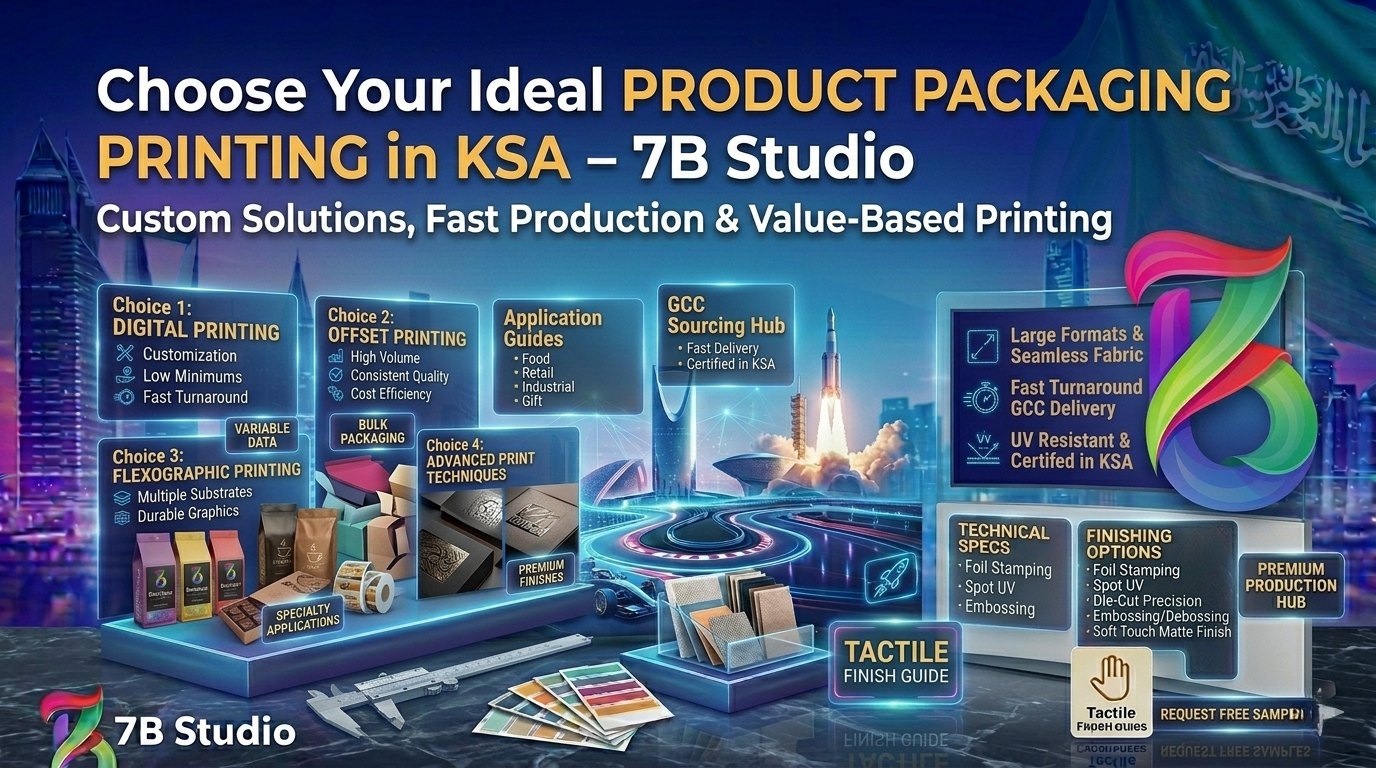
How to Choose a Product Packaging Printing Company in Saudi Arabia
To choose a product packaging printing company in Saudi Arabia, you must evaluate their minimum order quantities (MOQ), technical printing capabilities (digital vs. offset), and strict compliance with SFDA bilingual labeling requirements. Prioritize direct local manufacturers offering transparent bulk pricing, rapid nationwide delivery, and physical prototypes before mass production.
Finding the right manufacturing partner is often the most stressful hurdle for growing Saudi brands. You pour immense capital into developing a flawless retail item, but if the exterior box looks cheap or pixelated, consumers will simply ignore it. The vendor you select holds your entire brand reputation in their hands.
Consequently, mastering the procurement process for product packaging printing is absolutely vital for retail survival. This comprehensive guide will teach you exactly how to vet local manufacturers, select the perfect printing method, and navigate mandatory government compliance laws effortlessly.
What Is Product Packaging Printing and Why Does It Matter
At its core, product packaging printing is the highly specialized commercial process of transferring digital brand artwork onto physical structural materials like folding cartons, corrugated boxes, and flexible pouches. However, it is far more than just adding a logo to a box. It is the definitive physical touchpoint between your corporate brand and the local buyer.
The Role of Packaging in Saudi Consumer Buying Decisions
The modern Saudi consumer is incredibly discerning and fiercely loyal to high-end aesthetics. When they browse crowded retail shelves in Jeddah or browse e-commerce stores, they rely heavily on visual cues to gauge financial value. Therefore, utilizing premium materials and flawless typography instantly justifies a higher retail price point in the buyer’s mind.
How Product Packaging Printing Impacts Brand Perception in KSA
A flimsy box with faded, streaky ink subconsciously signals to the buyer that the actual item inside is equally low quality. Conversely, a beautifully crafted box featuring crisp, high-resolution graphics and elegant metallic foil communicates massive financial stability and unwavering corporate prestige. Consequently, your physical presentation does the heavy lifting of building consumer trust before they even test the item.
Types of Product Packaging Printing Methods Available
Selecting the correct commercial ink application method heavily dictates both your final visual quality and your overall invoice.
Digital Printing — Best for Small Runs and Fast Turnaround
Modern digital presses completely eliminate the massive mechanical setup times and expensive metal plates associated with traditional industrial manufacturing. If you are searching for product packaging printing online, digital is frequently the technology utilized for agile, short-run orders. Therefore, it is absolutely perfect for rapid seasonal marketing campaigns or localized product testing.
Offset Printing — Cost-Effective for Large Wholesale Orders
Offset printing utilizes custom-etched aluminum plates to transfer exact Pantone ink colors onto paperboard. It offers the absolute highest possible image quality and flawless color consistency available today. Consequently, if you require product packaging printing wholesale for massive retail distribution (e.g., 5,000+ units), offset printing drastically reduces your per-unit cost.
Flexographic Printing — Ideal for Flexible and Food Packaging
Flexography utilizes flexible rubber plates to stamp liquid ink directly onto raw substrates at incredibly high speeds. It remains the absolute most cost-effective manufacturing method for massive volumes of corrugated shipping cartons and flexible plastic food pouches. Therefore, it completely dominates the fast-moving consumer goods (FMCG) logistics sector.
| Printing Method | Best Use Case | Setup Cost | Per-Unit Cost (Bulk) |
| Digital | Short runs, rapid prototypes | Zero | High |
| Offset | High-volume retail boxes | High (Plates) | Very Low |
| Flexographic | Corrugated boxes, pouches | Moderate | Lowest |
7 Key Factors to Evaluate a Product Packaging Printing Company
Never blindly authorize a massive commercial payment without aggressively vetting the specific manufacturing facility first. You must evaluate any potential partner against these strict operational metrics.
Minimum Order Quantity (MOQ) — Does It Suit Your Business Size?
Industrial factories often require massive minimums of 3,000 to 5,000 units just to turn on their machines. If you operate a small boutique, this massive volume will aggressively drain your critical venture capital. Therefore, actively seek out highly flexible manufacturers who offer lower MOQs that align perfectly with your actual cash flow.
Print Quality and Material Options
You absolutely must demand physical material samples before signing any commercial contract. Inspect the structural rigidity of the paperboard and check for any blurry, pixelated typography on their previous work. Furthermore, ensure they offer premium finishing upgrades like spot UV coating, soft-touch lamination, and elegant metallic foil stamping.
Arabic Language and Bilingual Printing Capability
Designing effectively for the local demographic strictly requires a native understanding of Right-to-Left (RTL) structural flow. Simply mirroring an English template frequently results in highly disjointed, incredibly confusing Arabic visual layouts. Consequently, partnering with a local facility ensures your bilingual typography formats perfectly without embarrassing prepress errors.
Turnaround Time and Delivery Across KSA Cities
Understanding standard manufacturing timelines completely prevents devastating inventory stockouts during massive, highly critical seasonal sales events like Ramadan. You must explicitly verify their standard lead times from final artwork approval to physical delivery. Furthermore, ensure they operate a robust logistics network capable of shipping heavy pallets securely to Riyadh, Jeddah, and Dammam.
Design Support and Custom Packaging Services
Translating a flat 2D digital design into a functional, 3D folded box is incredibly complex. A premium manufacturer will actively assist you with this process by providing precise structural dieline templates. Therefore, this complimentary design support prevents disastrous, costly structural errors before ink ever hits paper.
Pricing Transparency and Bulk Discount Structure
Unscrupulous vendors frequently quote the absolute lowest raw manufacturing price, only to aggressively inflate the final invoice with hidden fees. You must demand a fully itemized quote. Verify exactly what they charge for custom die-cutting plates, pre-press setup, and final regional freight delivery.
Reviews, Samples and Client Portfolio — What to Check
Always request to see a physical portfolio featuring established Saudi brands in your specific commercial sector. If they successfully manufacture premium boxes for top-tier local cosmetic companies, they can likely execute your vision flawlessly. Consequently, verifying their past performance guarantees you are partnering with genuine industry professionals rather than unproven amateurs.
Saudi Packaging Printing Regulations You Must Know Before Ordering
Ignoring strict municipal regulations carries massive, immediate financial consequences. You must ensure your specific physical design perfectly complies with local government mandates.
SFDA Labeling Requirements for Product Packaging
The Saudi Food and Drug Authority (SFDA) rigorously enforces strict technical specifications for all commercial items entering the retail market. [INSERT REAL EXPERIENCE HERE: e.g., We recently helped a client redesign their entire inventory because their previous supplier printed the mandatory SFDA ingredient list in a font size that was technically illegal.] Absolute visual clarity regarding ingredients, usage warnings, and expiration dates is a strict, undeniable medical requirement.
Halal Certification Printing on Food and Cosmetic Packaging
If you are marketing consumable goods or specific cosmetics, prominently displaying the official Halal certification logo builds massive, unwavering trust with local consumers. However, you must possess the actual, legally binding certification before your printer applies this logo to your boxes. Falsely printing a Halal mark results in severe legal penalties and immediate product confiscation.
Country of Origin (COO) — Arabic Print Requirements
Saudi customs authorities mandate that the specific “Country of Origin” (e.g., “Made in KSA” or “Made in Italy”) must be permanently printed on the primary exterior panel. Furthermore, this critical logistical information must be explicitly displayed in clear, highly legible Arabic text. Therefore, failing to include this localized data guarantees immediate customs delays.
Product Packaging Printing for Small Businesses in Saudi Arabia
Startups and lean enterprises face unique logistical challenges when procuring physical marketing materials. You must actively optimize your procurement strategy to protect your early-stage capital.
Low MOQ Printers in Saudi Arabia — Options for Startups
Fortunately, the rapid rise of modern digital printing portals allows highly agile boutique vendors to offer incredibly low minimums. You can frequently secure short runs of just 250 beautifully customized units to launch your new brand safely. Consequently, this prevents startups from wasting crucial funds on massive warehouse boxes they will never actually use.
Online Product Packaging Printing Services That Deliver in KSA
Leveraging product packaging printing online portals allows you to instantly compare prices, select materials, and upload your artwork directly through a web browser. These highly automated digital platforms aggressively slash administrative overhead, passing the financial savings directly to the small business owner. Therefore, they represent the absolute most efficient procurement route for tech-savvy entrepreneurs.
Red Flags to Avoid When Choosing a Packaging Company
- Refusal to Provide Samples: If a commercial supplier refuses to provide a physical printed sample before demanding a massive deposit, walk away immediately.
- No Verifiable Physical Factory: If they cannot provide a legitimate factory address in Saudi Arabia, they are almost certainly a broker secretly outsourcing your job to cheaper, highly unreliable overseas factories.
- Vague Lead Times: A manufacturer who answers “soon” when asked about delivery dates is highly disorganized. Professional factories operate on strict, mathematical production schedules.
- Poor Communication: When managing a high-stakes product launch, you cannot afford to wait 48 hours for an email reply. Consistent communication delays are a massive warning sign.
Final Checklist — Questions to Ask Before Placing Your First Order
- Do you manufacture these specific boxes completely in-house?
- Are you fully capable of flawless Pantone (PMS) brand color matching?
- Will you provide a precise, blank digital dieline template for my graphic designer?
- What is your exact policy if a batch of boxes arrives with a major print defect?
- Are your printing inks eco-friendly and entirely food-safe (if applicable)?
- Does this exact quotation include the cost of custom die plates and final delivery?
Are you ready to elevate your brand with flawless, premium physical presentation? Partner with the manufacturing experts at 7b studio today for world-class product packaging printing that commands immediate consumer respect and protects your bottom line.
Frequently Asked Questions
1. What is the standard MOQ for product packaging printing in KSA?
For traditional offset manufacturing, commercial factories usually demand strict minimums of 1,000 to 3,000 units. However, modern digital printing facilities frequently accommodate agile short runs starting at just 250 to 500 units for startups.
2. How much does custom product packaging usually cost?
Pricing is highly dynamic. A simple, digitally printed folding carton might cost between SAR 1.50 and 3.00 per unit in bulk. Conversely, a luxury rigid box with gold foil stamping will easily cost SAR 15.00 to 30.00+ per unit.
3. How long does the manufacturing process take?
Standard digitally printed folding cartons typically require 7 to 10 business days following final digital artwork approval. Highly complex luxury rigid boxes frequently require 3 to 4 weeks for complete production and hand-assembly.
4. What file format do I need to send to the printer?
Commercial printing presses require absolute digital perfection. You must submit your finalized artwork as a fully flattened, high-resolution vector file, typically formatted as an Adobe Illustrator (.ai) file or a Print-Ready PDF.
5. Can I print high-resolution photographs on my packaging?
Yes, absolutely. By utilizing modern digital printing or high-end traditional offset presses, you can achieve stunning, flawless photographic image quality directly on your paperboard or flexible pouches.
6. Do I need to translate my entire package design into Arabic?
Yes, the Saudi Food and Drug Authority (SFDA) and local municipal laws strictly mandate that all primary product information, usage instructions, and safety warnings be prominently displayed in clear, highly accurate Arabic.
7. What is the difference between matte and gloss lamination?
Matte lamination provides a highly smooth, completely non-reflective surface that exudes quiet corporate sophistication. Gloss lamination applies a highly reflective, shiny chemical layer that makes colorful product photography appear incredibly vibrant.
8. What does “Spot UV” mean in packaging design?
Spot UV is a premium finishing technique that applies a thick, clear, high-gloss liquid polymer strictly to highly specific areas of your graphic design (like your logo). It creates a striking, elevated contrast against a matte background.
9. Will I own the custom die-cutting plates after I pay for them?
Usually, the physical metal die plates remain securely stored at the manufacturing facility for your future use. Because they are custom-built for your specific box shape, you will not have to pay the setup fee again on exact reorders.
10. How can I lower the per-unit cost of my custom packaging?
The absolute fastest way to heavily reduce your per-unit cost is to increase your total order volume, leveraging massive economies of scale. Furthermore, utilizing a clean, minimalist design with fewer complex metallic finishes keeps costs manageable.
Post a Comment