
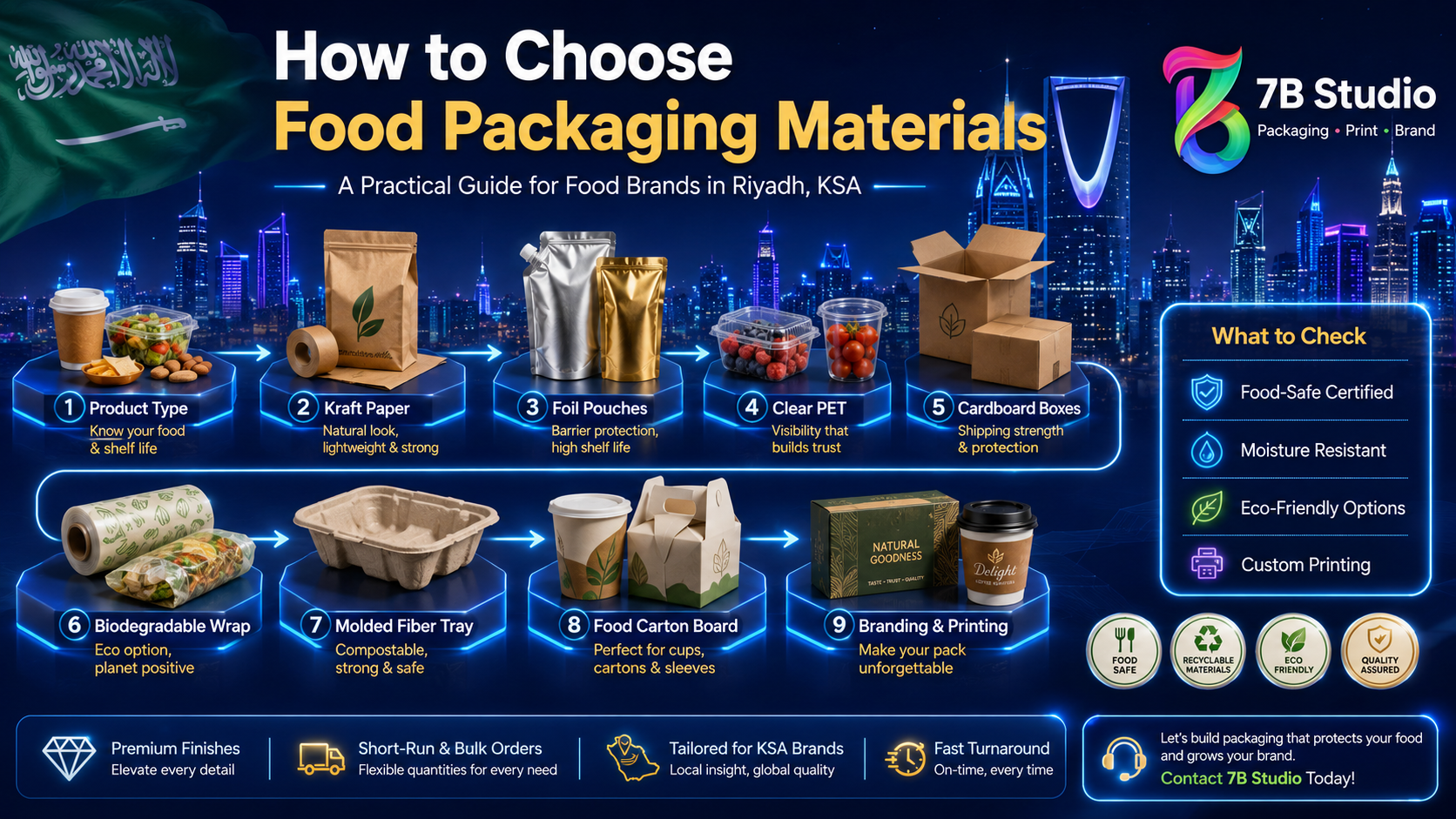
How to Choose Packaging Materials for Food Products: 9-Step Complete Guide
Choosing the right food packaging materials is not only a design decision. It is a safety, shelf life, compliance, branding, and cost decision at the same time. A poor packaging choice can cause leakage, contamination risk, product spoilage, weak shelf appeal, customer complaints, and unnecessary production costs. On the other hand, the right material protects the food, supports your brand image, improves handling, and helps your product stay fresh from production to consumption.
In 2025, food brands must think beyond “what looks good.” They need packaging that is food-grade, practical, affordable, sustainable, and suitable for the exact product type. Whether you sell bakery items, frozen meals, sauces, snacks, dairy products, beverages, ready-to-eat meals, or premium gift food, this guide will help you choose packaging materials with confidence.
Why Packaging Material Choice Matters
Food packaging works as the first layer of protection between your product and the outside world. It protects against moisture, oxygen, light, dust, physical damage, odor transfer, and microbial contamination. Because food products are sensitive to temperature, handling, storage, and transportation, the wrong material can reduce quality before the product even reaches the customer.
Good packaging also protects business value. If your packaging fails, you may lose more than one product. You may lose customer trust, repeat sales, shelf space, and brand credibility. For example, a sauce brand needs leak-resistant packaging, while a bakery brand may need breathable packaging that prevents sogginess. A frozen food company must focus on low-temperature durability, while a snack brand needs strong oxygen and moisture barriers.
Packaging also influences buying decisions. Customers often judge freshness, quality, hygiene, and premium value by looking at the package. Therefore, food packaging materials should support both performance and presentation. A strong packaging decision balances safety, function, compliance, sustainability, and brand appeal.
The 7 Types of Food Packaging Materials
There is no single best material for every food product. Each material has strengths and limitations. The best option depends on your food type, shelf life target, storage condition, budget, and branding goals.
Plastics
Plastic is one of the most common food packaging materials because it is lightweight, flexible, durable, and cost-effective. It is widely used for bottles, trays, pouches, containers, films, lids, and wraps. Common plastic types include PET, PP, PE, and HDPE.
PET is often used for beverage bottles and clear food containers because it offers good transparency and strength. PP is common for microwave-safe containers and takeaway packaging because it can handle heat better than many other plastics. PE and HDPE are often used for bags, liners, milk bottles, and flexible packaging.
However, plastic selection must be handled carefully. Not every plastic is suitable for every food. Hot, oily, acidic, or long-shelf-life products may require specific food-grade plastic with proper migration testing and certification.
Glass
Glass is a premium and highly protective packaging material. It is commonly used for sauces, jams, juices, pickles, honey, dairy desserts, premium beverages, and preserved foods. Glass does not easily react with food, offers strong barrier protection, and gives a premium look.
Another advantage is transparency. Customers can see the product clearly, which helps build trust. Glass is also recyclable and suitable for brands that want a premium or eco-conscious image.
Still, glass has some disadvantages. It is heavier than plastic, more expensive to transport, and breakable during handling. For this reason, it works best for premium products, retail shelves, and food items where presentation and protection justify the added cost.
Metal
Metal packaging is often used for canned food, beverages, powdered products, edible oils, dairy powders, and long-shelf-life goods. Aluminum and steel are common choices. Metal offers excellent protection against light, oxygen, and physical damage.
Canned food packaging is valuable because it can support long shelf life when processed correctly. Metal containers are also strong and stackable, which helps with transportation and storage.
However, food-contact coatings inside metal cans must be suitable for the product. Acidic foods, salty foods, and oily foods may need special internal coatings to prevent reaction and maintain safety.
Paper and Cardboard
Paper and cardboard are widely used for dry food, bakery packaging, takeaway boxes, cartons, sleeves, labels, and secondary packaging. These materials are popular because they are printable, lightweight, affordable, and easy to customize.
Cardboard packaging works especially well for branding. It gives space for logo, ingredients, nutrition information, QR codes, product story, and attractive design. For dry products like cereals, tea, biscuits, chocolates, and bakery items, paper-based packaging can be practical and visually appealing.
Nevertheless, plain paper does not provide strong moisture or grease resistance. Food brands often use coated paper, laminated paper, or inner liners when packaging oily, moist, or frozen products.
Flexible Films
Flexible films are used for chips, snacks, frozen food, coffee, spices, rice, pulses, confectionery, dried fruits, and ready-to-eat products. These films may include single-layer or multi-layer structures depending on barrier needs.
Flexible packaging is lightweight, cost-efficient, and suitable for high-volume production. It also allows strong branding through full-color printing. Stand-up pouches, vacuum packs, pillow packs, sachets, and flow wraps are common examples.
Barrier performance is the main reason flexible films are popular. They can protect against oxygen, moisture, aroma loss, and light when designed properly. Still, recycling can be more difficult when films use multiple layers or mixed materials.
Biodegradable
Biodegradable packaging materials are designed to break down under certain environmental or industrial composting conditions. They may be made from plant-based polymers, starch blends, sugarcane bagasse, bamboo, palm leaf, or compostable films.
These materials are gaining popularity because customers care more about sustainability. Restaurants, cafes, organic food brands, and eco-focused businesses often use biodegradable trays, bowls, cups, bags, and containers.
Even so, biodegradable does not automatically mean suitable for every food. Brands must check heat resistance, grease resistance, shelf life performance, and local composting infrastructure before choosing this option.
Composite
Composite packaging combines two or more materials to improve performance. A juice carton, for example, may combine paperboard, plastic, and aluminum layers. Snack packets may combine plastic film with metalized layers for better barrier protection.
Composite materials are useful when one material alone cannot provide enough strength, barrier, print quality, or shelf life. They are common in beverages, dairy, snacks, sauces, and ready-to-eat food.
The main challenge is recycling. Because composite packaging uses mixed layers, it can be harder to separate and process. Therefore, brands should evaluate whether the performance benefit is worth the environmental trade-off.
The 4 C’s of Packaging
The 4 C’s of packaging are commonly understood as containment, convenience, communication, and conservation. Together, they explain what food packaging should achieve.
Containment means the package must hold the product safely without leakage, collapse, tearing, or contamination. Liquids need tight sealing, powders need controlled dispensing, and fragile foods need structural protection.
Convenience focuses on how easy the packaging is to open, close, carry, store, pour, reseal, or dispose of. A customer-friendly package improves the overall product experience.
Communication refers to the information and branding displayed on the packaging. Labels, ingredients, nutrition facts, expiry dates, storage instructions, logos, claims, and QR codes all help customers make decisions.
Conservation means preserving food quality. The packaging should protect taste, texture, aroma, freshness, color, and safety throughout the intended shelf life.
9-Step Guide to Choosing the Right Material
Selecting food packaging materials becomes easier when you follow a structured process. These nine steps help reduce risk and improve decision-making.
Step 1: Define Your Food Type and Vulnerabilities
Start by understanding your product. Is it dry, oily, acidic, frozen, fresh, cooked, powdered, liquid, or fermented? Every food has different vulnerabilities.
Dry snacks may lose crispness when exposed to moisture. Coffee may lose aroma when exposed to oxygen. Fresh produce may need breathable packaging. Dairy products may require temperature-controlled packaging. Sauces and pickles may need materials that resist acidity and leakage.
The more clearly you understand your product’s weaknesses, the easier it becomes to choose the right packaging.
Step 2: Check Food-Grade Certification Requirements
Food packaging must be safe for direct or indirect food contact. That means the material should be food-grade and suitable for the intended use. Compliance may vary by market, so always check the requirements for the country where the product will be sold.
For international or export-focused products, brands often review FDA, EU, GCC, UAE, or local food authority requirements. In the EU, food contact materials must follow general safety principles, including requirements that materials should not endanger human health or cause unacceptable changes to food. In the U.S., FDA regulates many packaging-related substances as food contact substances.
Step 3: Assess Shelf Life Needs
Shelf life is one of the most important packaging factors. A product designed for same-day consumption does not need the same packaging as a product expected to stay fresh for six months.
Short shelf life products may need breathable or simple packaging. Medium shelf life products may require moisture control and better sealing. Long shelf life products usually need strong oxygen, moisture, and light barriers.
Before finalizing packaging, test the product under realistic storage conditions. Shelf life testing helps confirm whether the material can protect the food until the expiry date.
Step 4: Consider Handling and Distribution Conditions
Packaging must survive real-world handling. During distribution, products may face stacking pressure, vibration, heat, cold, humidity, drops, and repeated movement.
A premium-looking package is not enough if it fails during transport. For example, glass jars may need protective cartons, frozen foods may need materials that remain flexible at low temperatures, and bakery boxes may need enough stiffness to prevent crushing.
Distribution distance also matters. Local delivery packaging can be simpler than export packaging. Products shipped across cities or countries need stronger materials and better secondary packaging.
Step 5: Evaluate Moisture, Oxygen, and Light Barriers Needed
Barrier protection is essential for food quality. Oxygen can cause oxidation, flavor loss, discoloration, and rancidity. Moisture can make dry food soggy or powder clumpy. Light can damage oils, vitamins, colors, and sensitive ingredients.
Chips, nuts, coffee, spices, and powdered foods usually need good oxygen and moisture barriers. Dairy, juices, and oils may need light protection. Fresh produce may need controlled breathability instead of complete sealing.
Material choice should match the product’s barrier needs. Flexible films, metalized films, glass, metal cans, and coated paper all offer different levels of protection.
Step 6: Match to Portion Size and Retail Format
Packaging must fit the way customers buy and use the product. A single-serve snack needs a different format than a family-size pack. A premium gift item may need rigid packaging, while a daily-use product may need affordable and practical packaging.
Retail format also matters. Products displayed on shelves need strong visual impact. E-commerce products need durable shipping protection. Foodservice products need speed, convenience, and stackability.
Think about where the product will be sold: supermarket shelves, online stores, restaurants, cafes, hotels, vending machines, or delivery apps. The sales channel should influence the packaging format.
Step 7: Factor in Branding and Visibility Needs
Packaging is also a marketing tool. The material affects how your brand looks and feels. Transparent packaging builds trust by showing the product. Matte paperboard can feel organic and premium. Glossy flexible pouches can look bold and modern.
Branding needs may include full-color printing, labels, embossing, windows, QR codes, product photography, or bilingual information. A material with poor print quality can weaken your packaging design.
For premium food products, packaging should communicate quality before the customer tastes the product. For everyday products, packaging should be clear, practical, and easy to recognize.
Step 8: Calculate Cost Per Unit
Cost should be measured per unit, not only by total order price. A material may look cheap at first, but it can increase costs through damage, leakage, waste, returns, or short shelf life.
Calculate the full packaging cost, including material, printing, labels, sealing, labor, storage, transport, and waste. Also consider minimum order quantity and supplier reliability.
A smart packaging choice reduces hidden costs. Sometimes paying slightly more for better materials can save money by reducing product loss and improving customer satisfaction.
Step 9: Assess Sustainability and Environmental Footprint
Sustainability is now a major packaging factor. Customers increasingly prefer recyclable, reusable, biodegradable, compostable, or reduced-plastic packaging. However, sustainability should be practical, not just promotional.
A recyclable material is useful only if recycling systems exist in your target market. A compostable package may require industrial composting conditions. A lightweight plastic pouch may have a lower transport footprint than heavy glass, depending on the supply chain.
The best approach is to reduce unnecessary packaging, choose materials responsibly, avoid misleading claims, and select options that protect the food effectively. Food waste can also harm sustainability, so packaging must preserve the product properly.
Packaging Material Comparison Table by Food Category
| Food Category | Common Packaging Materials | Best For | Key Consideration |
|---|---|---|---|
| Bakery items | Paper bags, cardboard boxes, coated paper | Bread, cakes, pastries | Balance freshness with moisture control |
| Snacks and chips | Flexible films, metalized pouches | Crispy snacks, nuts, chips | Strong oxygen and moisture barrier |
| Sauces and condiments | Glass jars, PET bottles, pouches | Ketchup, sauces, dips | Leak resistance and acidity compatibility |
| Dairy products | PP cups, PET bottles, coated cartons | Yogurt, milk drinks, desserts | Temperature control and food-grade contact |
| Frozen food | PE bags, laminated films, trays | Frozen meals, vegetables, meat products | Low-temperature durability |
| Coffee and tea | Foil bags, composite pouches, tins | Beans, grounds, tea leaves | Aroma and oxygen protection |
| Fresh produce | Breathable films, paper trays, clamshells | Fruits, vegetables, salads | Ventilation and moisture balance |
| Ready-to-eat meals | PP trays, CPET trays, sealed films | Microwave meals, meal prep | Heat resistance and sealing performance |
| Beverages | Glass, PET, cans, cartons | Juice, water, soft drinks | Barrier, strength, and shelf presentation |
| Premium gifts | Rigid boxes, glass, printed cardboard | Chocolates, dates, sweets | Branding, protection, and luxury feel |
Food Safety and Compliance
Food packaging safety depends on material composition, intended use, temperature, contact time, and food type. A material that is safe for dry biscuits may not be suitable for hot soup, oily sauce, or acidic pickles.
Food-contact compliance often includes migration limits, material declarations, supplier documentation, traceability, and testing. In EU markets, Regulation EC No. 1935/2004 is a key framework for food contact materials, while specific rules such as Regulation EU No. 10/2011 apply to plastic food contact materials.
For U.S.-related compliance, food brands should check FDA food contact substance rules and relevant Code of Federal Regulations sections. For UAE or Gulf markets, companies should check current MoIAT, municipal, GCC, and local food safety requirements because ESMA functions were merged into MoIAT in 2020.
Food businesses should not rely only on supplier claims. Ask for documentation such as food-grade certificates, declaration of compliance, migration test reports, technical data sheets, and safe-use conditions. When the product is hot-filled, microwaved, frozen, acidic, oily, or stored for a long time, compliance review becomes even more important.
Eco-Friendly Packaging Options
Eco-friendly packaging is not one single material. It includes different approaches, such as recyclable plastic, recycled paperboard, compostable packaging, biodegradable containers, reusable glass, lightweight flexible packaging, and reduced-material designs.
Paper and cardboard are popular for eco-conscious branding, especially when sourced responsibly. Sugarcane bagasse is common for takeaway containers because it feels natural and can handle certain foodservice uses. Glass is reusable and recyclable, although its weight increases transport impact. Aluminum is widely recyclable, but production can be energy-intensive.
Compostable films and plant-based plastics are attractive options, yet they must be selected carefully. Some require industrial composting facilities and may not break down properly in normal landfill conditions. Therefore, packaging claims should be accurate and easy for customers to understand.
A strong sustainability strategy should reduce waste, protect food quality, improve recyclability where possible, and avoid overpackaging. Most importantly, the package must still do its main job: keeping food safe and suitable for consumption.
Choosing the right food packaging materials requires a careful balance between food safety, shelf life, cost, branding, distribution, and sustainability. The best material is not always the most expensive or the most attractive. It is the one that protects your product, meets compliance requirements, supports your brand, and gives customers a reliable experience.
Before finalizing any packaging material, define your food type, check food-grade requirements, test shelf life, review barrier needs, calculate full cost, and confirm sustainability claims. With a structured approach, food brands can reduce risk, improve product quality, and create packaging that performs well in the real market.
Need professional food packaging design, label design, or brand-ready packaging support? 7B Studio can help you create attractive, practical, and market-ready packaging designs for food products. From concept to final print layout, 7B Studio focuses on clean branding, customer-friendly design, and packaging visuals that help your product stand out with confidence.
Frequently Asked Question
1. What are food packaging materials?
Food packaging materials are materials used to contain, protect, store, transport, and present food products. Common examples include plastic, glass, metal, paper, cardboard, flexible films, biodegradable materials, and composite packaging.
2. What is the best packaging material for food?
The best material depends on the food type. Dry snacks may need moisture-resistant flexible films, sauces may need glass or PET bottles, frozen foods may need durable plastic films or trays, and bakery items may use paper or cardboard packaging.
3. Why is food-grade packaging important?
Food-grade packaging is important because the material comes into direct or indirect contact with food. It must be suitable for the intended food type, storage condition, temperature, and contact time.
4. Which packaging material is best for long shelf life?
Glass, metal cans, foil laminates, metalized films, and high-barrier flexible pouches are commonly used for long shelf life. The right choice depends on whether the product needs protection from oxygen, moisture, light, or aroma loss.
5. What are the 4 C’s of packaging?
The 4 C’s of packaging are containment, convenience, communication, and conservation. These describe how packaging holds the product, supports user experience, shares information, and preserves food quality.
6. Is biodegradable packaging always better?
Not always. Biodegradable packaging can be useful, but it must match the food’s safety, shelf life, heat, grease, and storage needs. Brands should also check whether proper composting or disposal systems are available.
7. What packaging is suitable for hot food?
Hot food usually needs heat-resistant materials such as suitable PP containers, coated paperboard, aluminum trays, or bagasse containers. The final choice depends on temperature, grease level, delivery time, and local compliance requirements.
8. How do I reduce food packaging cost?
You can reduce cost by choosing the right size, avoiding overpackaging, ordering suitable quantities, simplifying print finishes, reducing material waste, and selecting packaging that prevents product damage or spoilage.
9. What should I check before ordering food packaging?
Check food-grade certification, material type, size, barrier properties, heat or freezer resistance, printing quality, sealing method, supplier reliability, compliance documents, and total cost per unit.
10. Can packaging design affect food sales?
Yes. Packaging design can strongly influence customer perception, shelf appeal, trust, and buying decisions. A clear, attractive, and practical package can help customers understand the product quickly and feel more confident buying it.
Post a Comment