
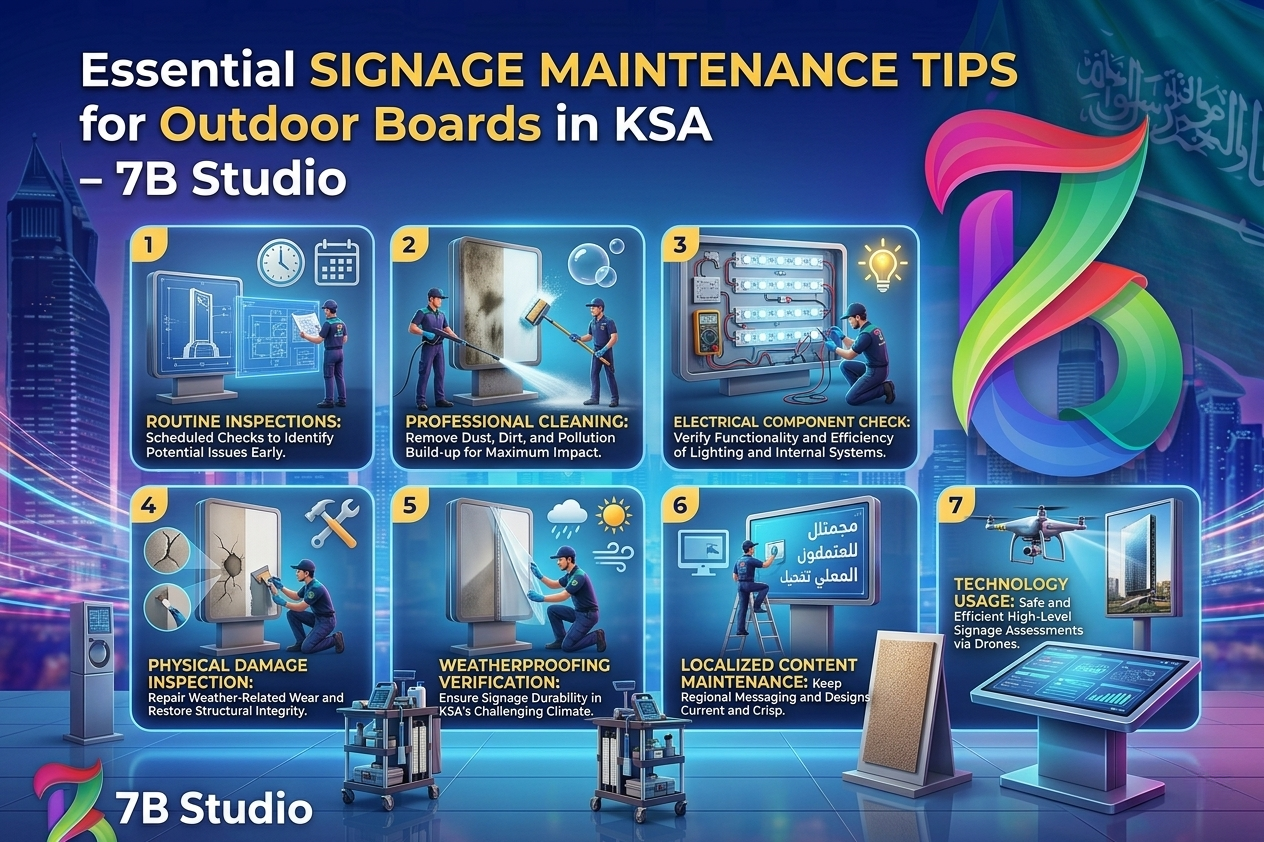
Signage Maintenance Tips for Outdoor Boards: The Complete Guide
Your outdoor signage works for your business 24 hours a day, 7 days a week. It is the physical face of your brand. However, because outdoor boards are constantly exposed to UV rays, heavy rain, wind, and pollution, they degrade faster than most business owners realize. A faded, peeling, or dirty sign does not just look unprofessional; it actively turns potential customers away.
This guide covers the essential maintenance strategies required to protect your outdoor boards, extend their lifespan, and keep your storefront looking pristine year-round.
Why Routine Outdoor Signage Maintenance Matters
Outdoor boards are a significant capital investment. Without regular upkeep, dirt and grime bake into the surface, UV rays bleach your brand colors, and structural hardware begins to rust. Routine maintenance prevents these elements from causing irreversible damage, saving you the high cost of a full early replacement while ensuring your brand image remains sharp and authoritative.
Material-Specific Cleaning Strategies
Different outdoor board materials require entirely different cleaning approaches. Using the wrong chemical can strip paint, cloud acrylic, or corrode metal.
Cleaning Acrylic and Plastic Signs
Acrylic is notorious for scratching easily. Never use paper towels or ammonia-based glass cleaners (like standard Windex), as ammonia will cause the plastic to turn cloudy and brittle over time. Use a clean microfiber cloth and a mixture of lukewarm water and a few drops of mild dish soap. Wipe gently in straight lines rather than circles to avoid swirl marks.
Maintaining Metal and Aluminum Boards
Aluminum and steel signs are highly durable but prone to water spots and oxidation. Wash them with a standard automotive soap and a soft sponge. To protect the finish and make future cleaning easier, apply a high-quality liquid car wax to the metal surface once a year. This creates a barrier against acid rain and road grime.
Caring for Wood and Painted Signs
Wood boards require the most vigilance because they are susceptible to rot. Gently wash the surface with a soft-bristle brush and a dedicated wood cleaner. Never use a pressure washer on a painted wood sign, as it will inject water into the grain and strip the paint. Reapply a UV-resistant, clear polyurethane topcoat every two to three years to seal out moisture.
The Quarterly Inspection Checklist
Cleaning is only half the job. You need to inspect the structural integrity of your outdoor boards to prevent safety hazards.
Check Structural Integrity and Mounting Hardware
Wind and temperature fluctuations cause metal brackets to expand, contract, and eventually loosen. Inspect the bolts, lag screws, and poles holding your board in place. Look for rust tracks running down the face of the sign, which is a primary indicator that a steel fastener is failing and needs to be replaced.
Look for Weather Damage and Fading
Inspect the vinyl lettering or printed graphics for peeling edges, bubbling, or cracking. Catching a peeling corner early allows you to apply a specialized edge-sealer adhesive before the wind catches it and rips the entire letter off.
Inspect External Lighting Elements
If your outdoor board is illuminated by external gooseneck lights or ground spotlights, check the housings for water ingress. Wipe down the glass lenses to ensure maximum brightness, and replace any flickering or burned-out bulbs immediately to maintain visibility at night.
Preventing Damage Before It Happens
Apply UV Protection and Clear Coats
The sun is the biggest enemy of outdoor boards. When ordering a new sign, always specify that you want a UV-laminate applied over the graphics. For existing signs, regularly applying a UV-protectant spray (similar to marine or automotive protectants) will significantly slow down the fading process.
Implement Bird and Pest Deterrents
Birds love to nest behind monument signs and sit on top of projecting boards. Bird droppings are highly acidic and will eat through paint and vinyl rapidly. Install discreet bird spikes along the top edge of your board to prevent roosting and keep the face of your sign clean.
When to Repair and When to Replace
A good rule of thumb is the 50% rule. If the cost to repaint, re-vinyl, or fix the mounting hardware of your current board exceeds 50% of the cost of a brand-new sign, it is time to replace it. Additionally, if a wood sign feels soft to the touch (indicating core rot), or a metal sign has deep structural rust, replacement is the only safe option. Protect your brand’s first impression and extend the lifespan of your boards with expert outdoor signage maintenance from 7bstudio.
FAQs — Outdoor Signage Maintenance
1. How often should I clean my outdoor board?
You should clean your outdoor signs at least four times a year. If your business is located on a busy road with high exhaust pollution or under trees, you may need to clean it every two months.
2. Can I use a pressure washer to clean my outdoor sign?
It is highly discouraged. High-pressure water can strip paint, blast off vinyl lettering, and force water into seams, causing internal rust or wood rot. Stick to a garden hose with a standard spray nozzle.
3. Why is my acrylic sign turning cloudy?
Cloudiness is usually caused by using harsh chemicals, specifically ammonia-based window cleaners, or by micro-scratches from wiping the sign with dry paper towels.
4. How can I stop the vinyl letters from peeling off my board?
Ensure the board is completely clean and free of grease before the vinyl is applied. If edges start to lift over time, you can use a clear edge-sealer pen to glue the corners back down before they tear.
5. What is the best way to remove graffiti from a sign?
Act quickly. The longer spray paint sits, the harder it is to remove. Use a dedicated, citrus-based graffiti remover. Test it on a small, hidden corner first to ensure it does not melt the underlying sign material.
6. Do I need to wax my metal signage?
Yes. Applying a standard automotive car wax to painted aluminum or steel boards adds a protective layer against UV rays, bird droppings, and hard water spots.
7. How long should an outdoor sign last?
With proper maintenance, a high-quality aluminum or acrylic outdoor board can last 7 to 10 years before the sun causes noticeable fading. Wood signs typically require refinishing every 3 to 5 years.
8. How do I keep spiders and bugs off my sign?
Insects are attracted to the lights shining on your sign. Spray a perimeter insect repellent around the base and mounting brackets of the board every spring to keep webs and nests to a minimum.
9. Can a faded sign be restored, or do I need a new one?
If the board itself is structurally sound, you do not need a whole new sign. A sign company can strip the old faded vinyl and apply brand new graphics to your existing board for a fraction of the cost.
10. What should I do if my sign gets damaged in a storm?
Document the damage with clear photos immediately for your insurance company. Do not attempt to climb up and fix a structurally compromised sign yourself; call a professional sign company to secure it safely.


Post a Comment