
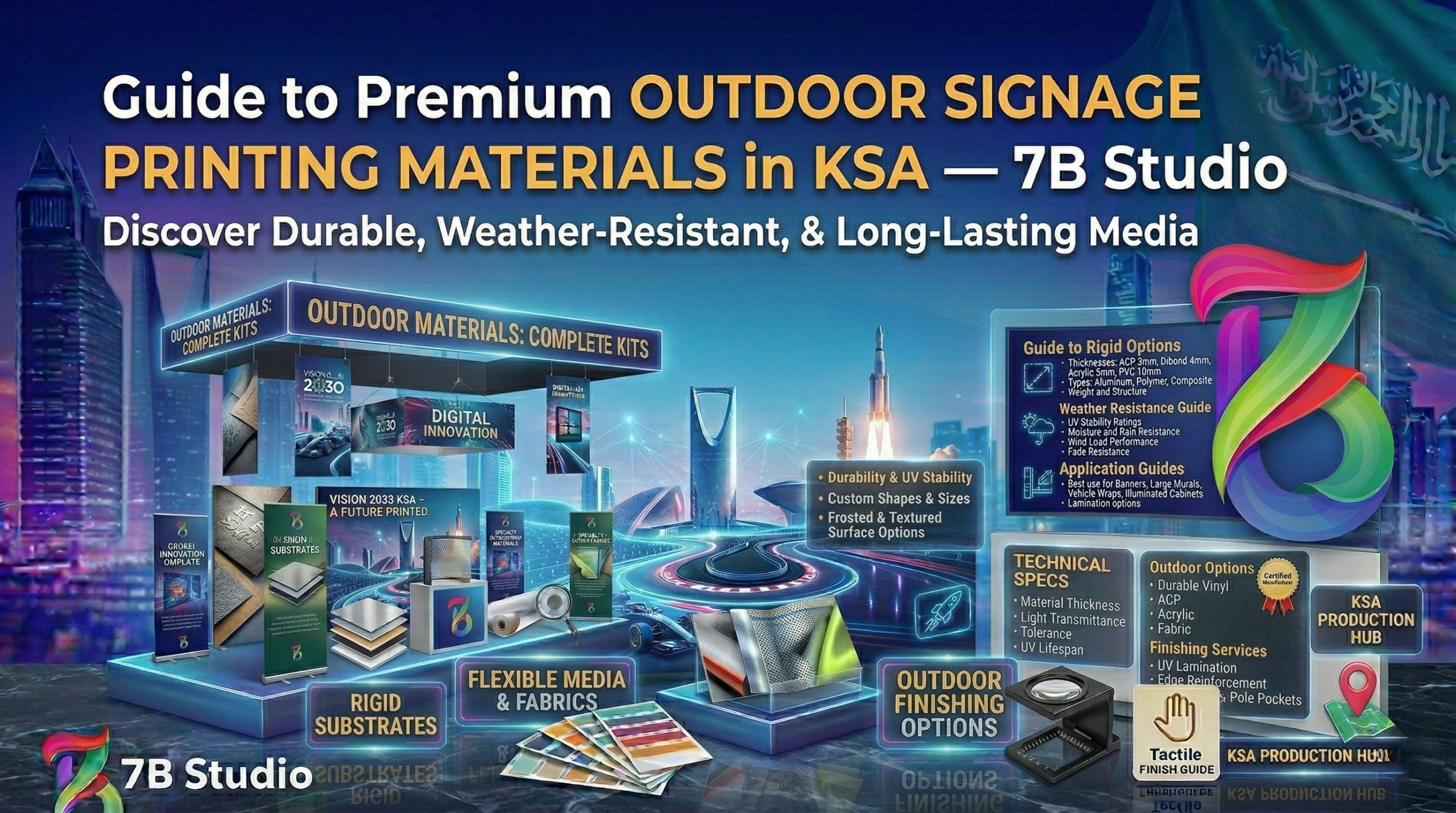
How to Choose Outdoor Signage Printing Materials: Dibond vs Foamex vs Correx vs Banner PVC Explained
To choose the right material for outdoor signage printing, you must match the substrate to your project’s lifespan and environment. Dibond offers permanent, premium durability; Foamex provides a smooth mid-range option; Correx is the cheapest choice for temporary events; and PVC banners deliver large-format flexibility for fences and hoardings.
Choosing the wrong material for an exterior display is one of the most frustrating and expensive mistakes a business can make. You invest heavily in beautiful graphic design, only to watch the board warp, fade, or snap in half after the first major storm or intense heatwave. If you are preparing to order physical marketing assets, you cannot afford to guess which rigid board or flexible banner will actually survive outside.
Understanding the technical differences between outdoor signage printing substrates completely prevents these costly failures. [INSERT REAL EXPERIENCE HERE: e.g., In our years of managing large-scale print installations, the most common trap we see brands fall into is ordering cheap Foamex for a permanent sun-facing storefront, resulting in severe warping within six months.] This comprehensive guide breaks down the four industry-standard materials: Dibond, Foamex, Correx, and PVC. We will compare their durability, analyze their ideal use cases, and help you select the exact right product to protect your brand image and your budget.
Why Your Choice of Outdoor Signage Printing Material Matters More Than You Think
Selecting a substrate is not just a secondary administrative task; it fundamentally dictates how the public perceives your business. A cracked, peeling, or weather-beaten sign subconsciously signals to potential customers that your enterprise lacks stability and attention to detail.
Furthermore, the physical environment is incredibly hostile to printed materials. High winds generate massive shear force on large panels, while ultraviolet (UV) radiation chemically degrades ink pigments. Therefore, matching the specific molecular structure of the sign material to its intended environment acts as a mandatory insurance policy for your marketing budget.
The 4 Most Common Signage Materials at a Glance
Before diving into the complex technical specifications, it helps to understand how these four dominant materials compare on a high level.
| Material | Composition | Lifespan | Weather Resistance | Best Use Case |
| Dibond (ACM) | Aluminum skin over a polyethylene core | 5–10+ Years | Exceptional (Wind, UV, Rain) | Permanent storefronts, premium hoarding |
| Foamex | Compressed PVC foam | 1–3 Years | Moderate (Can warp in high heat) | Mid-term retail, wall-mounted displays |
| Correx | Fluted corrugated plastic | 1–6 Months | Low/Moderate (Wind can bend it) | Temporary event signs, estate agents |
| Banner PVC | Flexible vinyl mesh | 1–3 Years | High (If hemmed and eyeletted) | Large format fences, temporary promos |
Dibond – The Premium Choice for Long-Term Outdoor Signage Printing
When you require absolute permanence and flawless corporate prestige, Dibond is the undisputed king of the commercial print industry.
What Is Dibond and How Is It Made?
Dibond—technically known as Aluminum Composite Material (ACM)—is a highly rigid board consisting of a solid polyethylene plastic core sandwiched perfectly between two ultra-thin sheets of aluminum. This brilliant engineering creates a panel that boasts the raw strength of solid metal while remaining incredibly lightweight and easy to mount.
Pros and Cons of Dibond for Outdoor Signs
- Pros: It is virtually indestructible under normal weather conditions. It never rusts, resists severe wind shear, and provides an incredibly smooth, flat surface for flawless, high-resolution printing.
- Cons: It is the most expensive material on this list. It is also highly rigid, making it difficult to transport in massive sheets without professional freight vehicles.
When Should You Choose Dibond?
You should explicitly choose Dibond for any permanent exterior installation. It is the absolute industry standard for primary storefront fascias, permanent wayfinding directories in corporate parks, and high-end construction hoarding where the graphics must look pristine for years.
Typical Cost Range
Because it utilizes raw aluminum, Dibond sits in the premium pricing tier. While exact prices fluctuate based on the finish (e.g., brushed silver vs. standard white) and regional material costs, expect to pay a significant premium over standard plastics.
Foamex – Lightweight and Versatile for Mid-Range Outdoor Signage
Foamex strikes a highly popular balance between premium print quality and manageable procurement costs.
What Is Foamex and How Is It Made?
Despite having “foam” in the name, Foamex is actually a solid, rigid sheet made from compressed Polyvinyl Chloride (PVC). It does not feel like a sponge; it feels like a hard, smooth piece of matte plastic. It is manufactured in various thicknesses, most commonly 3mm, 5mm, and 10mm.
Pros and Cons of Foamex for Outdoor Signs
- Pros: It is highly affordable, incredibly easy to cut into custom shapes with a CNC router, and provides a stunningly crisp surface for direct UV printing.
- Cons: It is highly susceptible to thermal expansion. If you mount a large, thin Foamex board in direct sunlight without securing it to a solid backing wall, it will inevitably warp and bow.
When Should You Choose Foamex?
Foamex is absolutely perfect for mid-term installations. Choose a thick 5mm or 10mm board for semi-permanent exterior retail displays, outdoor exhibition panels, and directional signage that is securely screwed into a flat fence or wall.
Typical Cost Range
Foamex sits firmly in the middle tier of pricing. It provides a highly professional, smooth appearance that mimics Dibond, but at a fraction of the raw material cost.
Correx – The Budget-Friendly Outdoor Signage Printing Option
For rapidly deployed, short-term campaigns, no material beats the sheer economic efficiency of Correx.
What Is Correx and How Is It Made?
Correx is a highly lightweight, corrugated plastic sheet. If you look closely at the edge of the board, you will see a hollow, ribbed “fluted” structure identical to a cardboard box, but made entirely of waterproof polypropylene.
Pros and Cons of Correx for Outdoor Signs
- Pros: It is incredibly cheap, fully waterproof, 100% recyclable, and so lightweight that you can easily attach it to a lamppost using standard plastic cable ties.
- Cons: It lacks structural rigidity and bends easily across the flutes in high winds. Furthermore, the ribbed internal structure creates a very subtle striped texture across the printed graphic, reducing fine image clarity.
When Should You Choose Correx?
Correx is strictly for temporary applications. It is the universal standard for estate agent “For Sale” boards, temporary festival directional arrows, rapid election campaign signs, and short-term construction site safety notices.
Typical Cost Range
Correx is the absolute cheapest rigid material available on the commercial market. You can procure massive volumes of these boards for a negligible fraction of your overall marketing budget.
Banner PVC – Flexible, Affordable and Built for Large Formats
When you need to cover massive physical areas without the logistical nightmare of transporting rigid boards, flexible PVC banners are the ultimate solution.
What Is Banner PVC and How Is It Made?
Banner PVC is a heavy-duty, highly flexible vinyl mesh. Modern commercial printers print directly onto giant rolls of this material. The edges are then folded over (hemmed) for extra tear resistance, and metal rings (eyelets) are punched into the perimeter for secure hanging.
Pros and Cons of Banner PVC for Outdoor Signs
- Pros: It is incredibly cheap per square meter, rolls up tightly for incredibly easy transport in a standard car, and can be printed in continuous, massive formats (e.g., 5 meters wide by 30 meters long).
- Cons: It looks less premium than a rigid board. If it is not pulled perfectly taut during installation with heavy-duty bungee cords, it will sag unprofessionally and flap violently in the wind.
When Should You Choose Banner PVC?
PVC banners are absolutely ideal for wrapping temporary construction fencing, advertising grand openings over a storefront, or hanging massive promotional graphics from the side of a building.
Typical Cost Range
PVC sits right alongside Correx in the extreme budget tier, offering the absolute lowest cost per square meter for large-scale physical advertising.
Dibond vs Foamex vs Correx vs Banner PVC – Side-by-Side Breakdown
Which Material Handles Weather and UV Best?
Dibond is the undisputed champion of weather resistance. Its aluminum skin completely ignores water, and it physically cannot warp in extreme heat.
Which Is the Most Cost-Effective for Short-Term Use?
If you simply need a sign to last for a two-week event, Correx is your most cost-effective rigid option. If you need a massive, temporary sign, a PVC banner offers the best large-format value.
Which Is Best for Permanent Business Signage?
Never utilize Correx or thin Foamex for your permanent storefront. Dibond is the only material on this list that projects the necessary corporate permanence and guarantees a 5-to-10-year physical lifespan.
Which Material Works Best for Large Outdoor Signs?
For massive, seamless graphics that cover entire building facades, flexible Banner PVC is the logistical winner. However, if the large sign must be perfectly rigid and flat (like a hoarding wall), you must utilize multiple Dibond panels placed side-by-side.
How to Choose the Right Outdoor Signage Printing Material for Your Business
Consider Your Budget
Be brutally honest about your available capital. If you possess a massive budget, default to Dibond for everything to avoid replacement costs. If your budget is incredibly tight, utilize a hemmed PVC banner to get your message out immediately without breaking the bank.
Consider How Long You Need the Sign to Last
- 1 to 6 Months: Correx or Banner PVC.
- 1 to 3 Years: 5mm or 10mm Foamex (mounted securely).
- 3 to 10+ Years: Dibond (ACM).
Consider Where the Sign Will Be Displayed
If your sign will sit in a highly exposed, windy area (like a coastal road or high elevation), Correx will bend and rip off its mountings. You absolutely must utilize the heavy structural rigidity of Dibond.
Consider the Size and Print Requirements
If your corporate artwork relies on incredibly fine, high-resolution photographic imagery, avoid Correx. The fluted ridges will distort the fine details. Opt for the flawlessly smooth surfaces of Foamex or Dibond instead.
Common Mistakes to Avoid When Choosing Materials
- Ignoring the Sun: Placing thin 3mm Foamex in direct, harsh sunlight without screwing it to a solid wall. It will physically warp into a wavy shape within weeks. [INSERT REAL EXPERIENCE HERE: e.g., Briefly explain how adding a protective UV overlaminate to a Dibond board saved a client from replacing a south-facing sign.]
- Choosing the Wrong Fasteners: Trying to screw a heavy Dibond sign into drywall without proper anchors, or using weak string instead of industrial zip ties for a heavy PVC banner.
- Overspending on Temporary Events: Ordering highly expensive Dibond boards for a one-day golf tournament when cheap, fully recyclable Correx would have executed the job perfectly.
Final Verdict – Which Outdoor Signage Printing Material Should You Choose?
Selecting the correct commercial substrate is simply a matter of aligning your desired lifespan with the physical realities of the environment. If you want a sign that you can install once and completely forget about for the next decade, invest heavily in Dibond. If you need an incredibly sharp, rigid display for a six-month promotional campaign, Foamex offers the perfect middle ground. Finally, for massive, highly temporary coverage on a strict budget, Correx and PVC banners remain entirely undefeated.
Ready to bring your physical brand to life with materials that actually survive the elements? Partner with 7b studio today for expert outdoor signage printing solutions engineered for durability and flawless visual impact.
Frequently Asked Questions
1. What is the absolute strongest material for outdoor signage printing?
Dibond (Aluminum Composite Material) is universally the strongest, most durable option. Its aluminum skin and solid plastic core provide massive impact resistance and total immunity to warping in extreme heat.
2. Is Foamex completely waterproof for outdoor use?
Yes, Foamex is manufactured from compressed PVC, meaning it will not absorb water or rot like traditional wood. However, it is highly susceptible to thermal expansion and can warp in direct, extreme sunlight.
3. How do you stop a PVC banner from tearing in the wind?
You must explicitly order your PVC banner with “hems and eyelets.” Furthermore, always secure the banner tightly to a fence or frame using flexible bungee cords rather than rigid zip-ties, as bungees absorb the heavy wind shock.
4. Can I recycle Correx boards after my event finishes?
Yes, absolutely. Correx is manufactured entirely from polypropylene (Plastic Type 5), making it 100% recyclable at standard commercial waste management facilities.
5. Why does my Correx sign look slightly striped?
Correx is a corrugated plastic, meaning it features hollow internal ridges (flutes) to keep it lightweight. These internal flutes create a very subtle, unavoidable striped texture across the surface of the printed graphic.
6. Can you print high-resolution photographs on Dibond?
Yes. Dibond possesses an incredibly smooth, perfectly flat surface. When combined with modern UV flatbed printing technology, it produces stunning, flawless photographic image quality suitable for high-end luxury branding.
7. What thickness of Foamex should I use outdoors?
Never use 1mm or 3mm Foamex for freestanding outdoor applications. You absolutely must upgrade to a highly rigid 5mm or 10mm thickness, and ensure it is firmly screwed to a solid backing wall to prevent bowing.
8. Is Dibond heavier than standard plastic signs?
While it is heavier than Correx or Foamex, Dibond is incredibly lightweight compared to solid steel or heavy timber. A standard 3mm thick sheet is remarkably easy for a two-person installation crew to manage.
9. Can I cut Foamex into custom shapes for my logo?
Yes. Foamex is incredibly easy to route and cut. Commercial printing facilities frequently utilize precision CNC machines to cut Foamex boards into highly complex, custom shapes and individual lettering.
10. Does Dibond rust over time?
No, it does not. Dibond features a thin aluminum skin, and aluminum is inherently rust-proof. This makes it an absolutely perfect, long-term material choice for harsh coastal environments with high salt and moisture levels.
Post a Comment